Photography and Wildlife in South Luangwa National Park
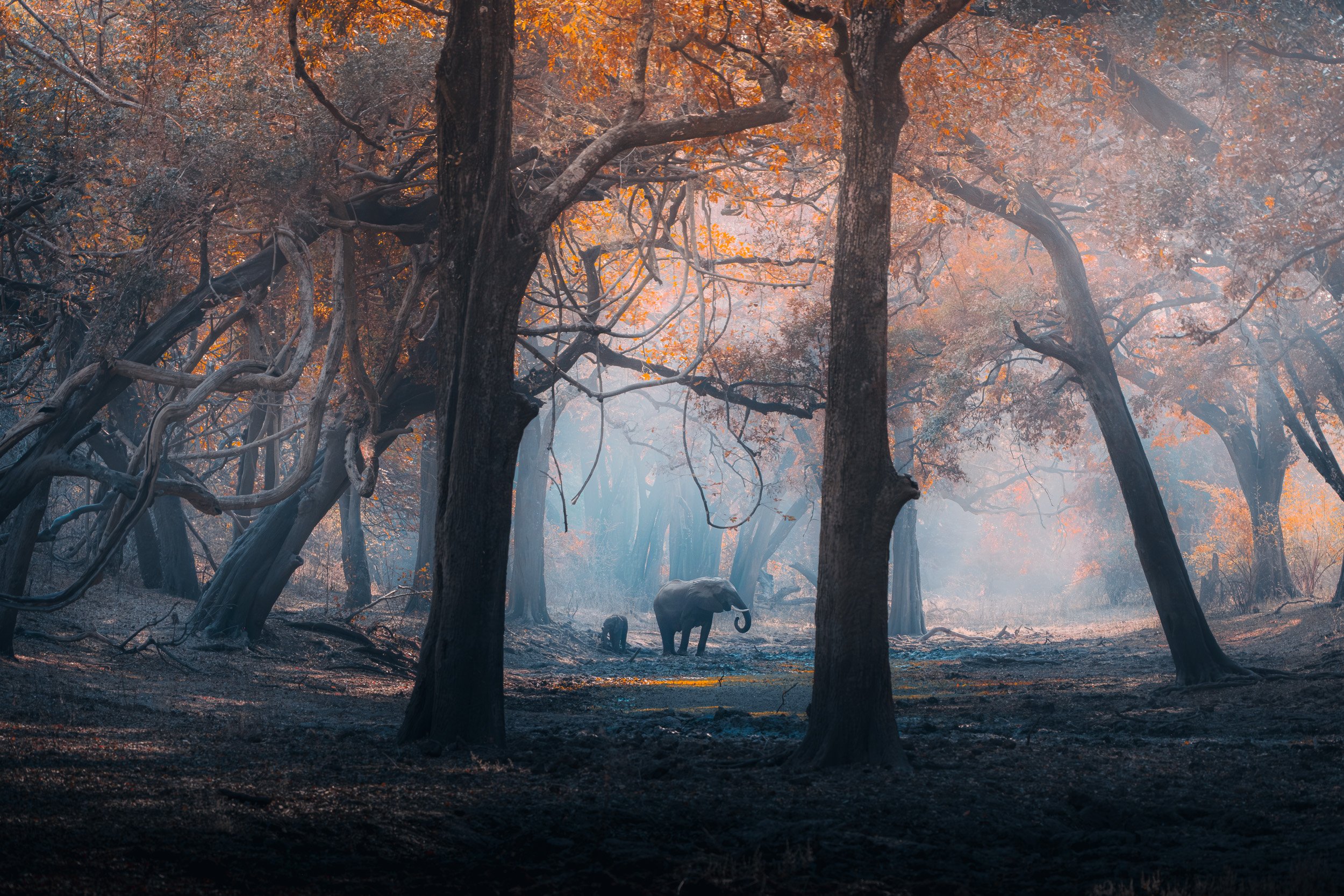
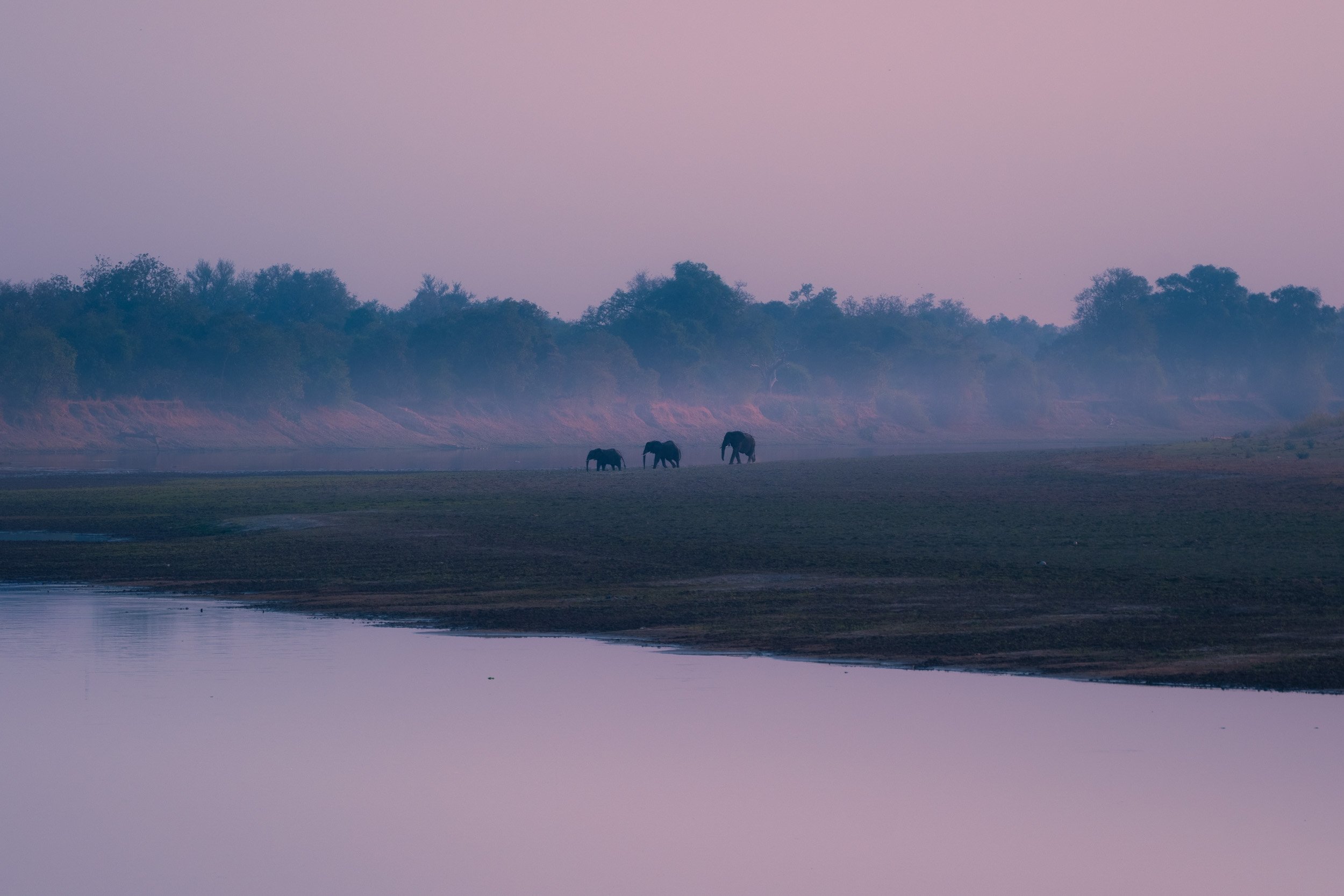
Elephants under the trees in the South Luangwa National Park, Zambia. Taken with Fujifilm X-H2 w/ 70-300mm Fuji lens.
Guide to South Luangwa Wildlife
South Luangwa National Park, in eastern Zambia, is one of Africa’s premier wildlife destinations. Centered around the Luangwa River and its seasonal lagoons, the park supports an exceptional density and variety of animals, particularly during the dry season when wildlife gathers near remaining water sources.
Key Habitats
Luangwa River: The park’s lifeline, home to hippos, crocodiles, elephants, and abundant birdlife.
Lagoons and oxbow lakes: Seasonal wetlands that attract large herds of herbivores and their predators.
Mopane woodland: Common habitat for elephants, giraffes, antelope, and numerous birds.
Open grasslands: Prime areas for spotting zebra, buffalo, impala, puku, and hunting predators.
Mammals to Look For
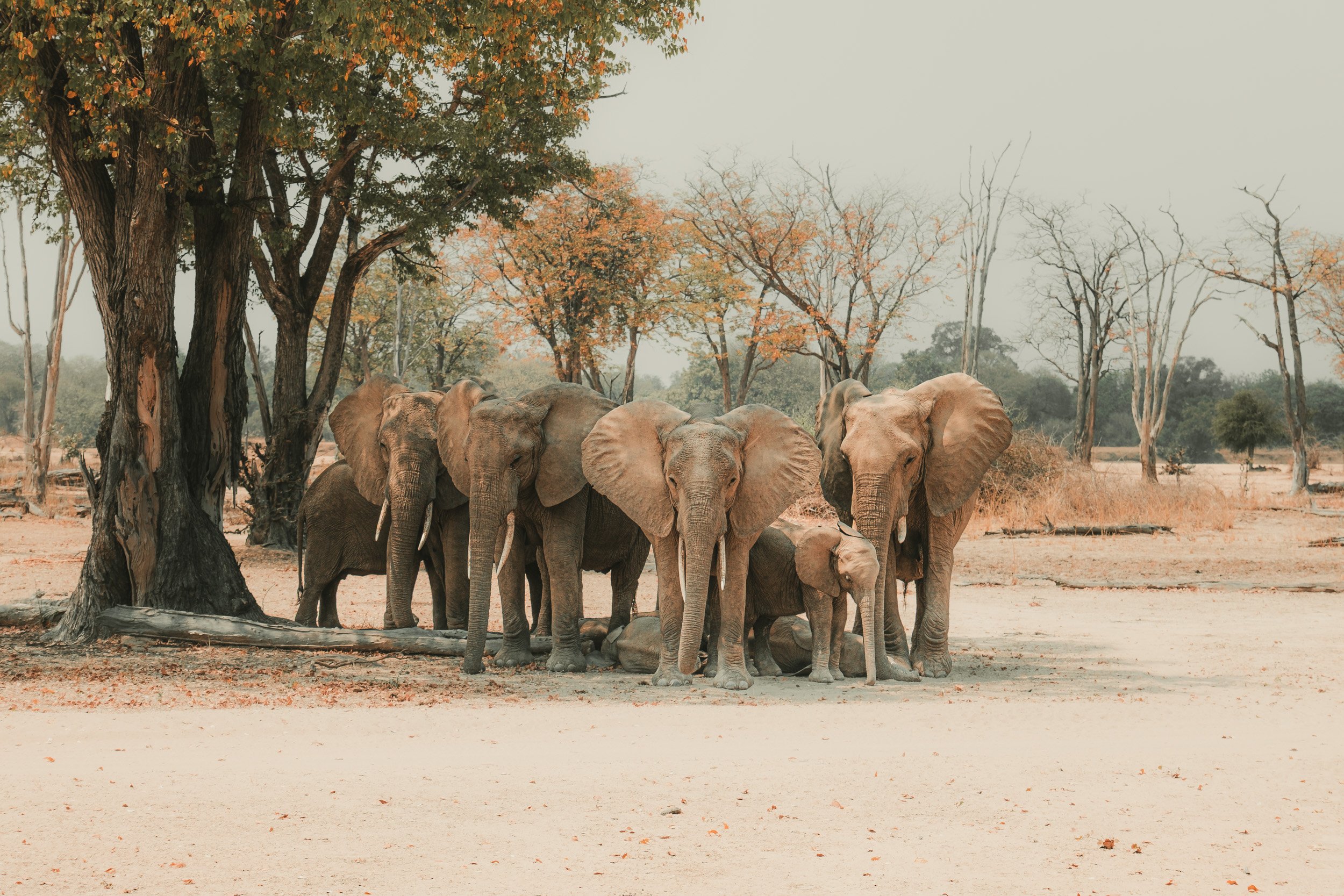
Elephants under the trees in the South Luangwa National Park, Zambia. Taken with Fujifilm X-H2 w/ 70-300mm Fuji lens.
Elephants
South Luangwa is well known for its elephants, often seen in family groups along the riverbanks and near safari camps. During the dry season, elephants may move through lodge grounds in search of fruit, water, or shade.
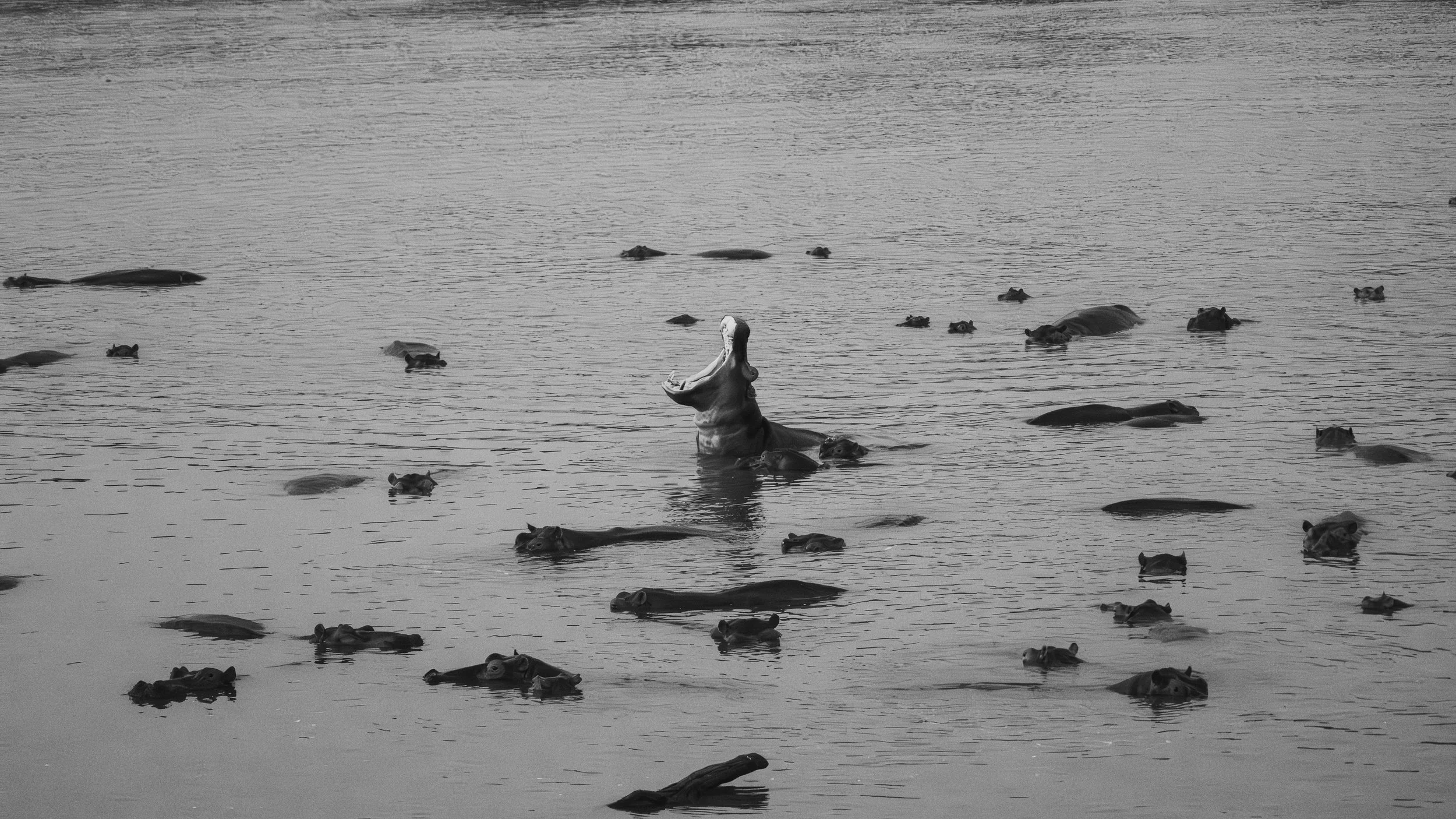
A hippo at sunset in the South Luangwa National Park, Zambia. Taken with Fujifilm X-H2 w/ 70-300mm Fuji lens.
Hippopotamus
The Luangwa River holds large concentrations of hippos. They spend much of the day in water and emerge at night to graze. Their calls are a defining sound of the park after dark.
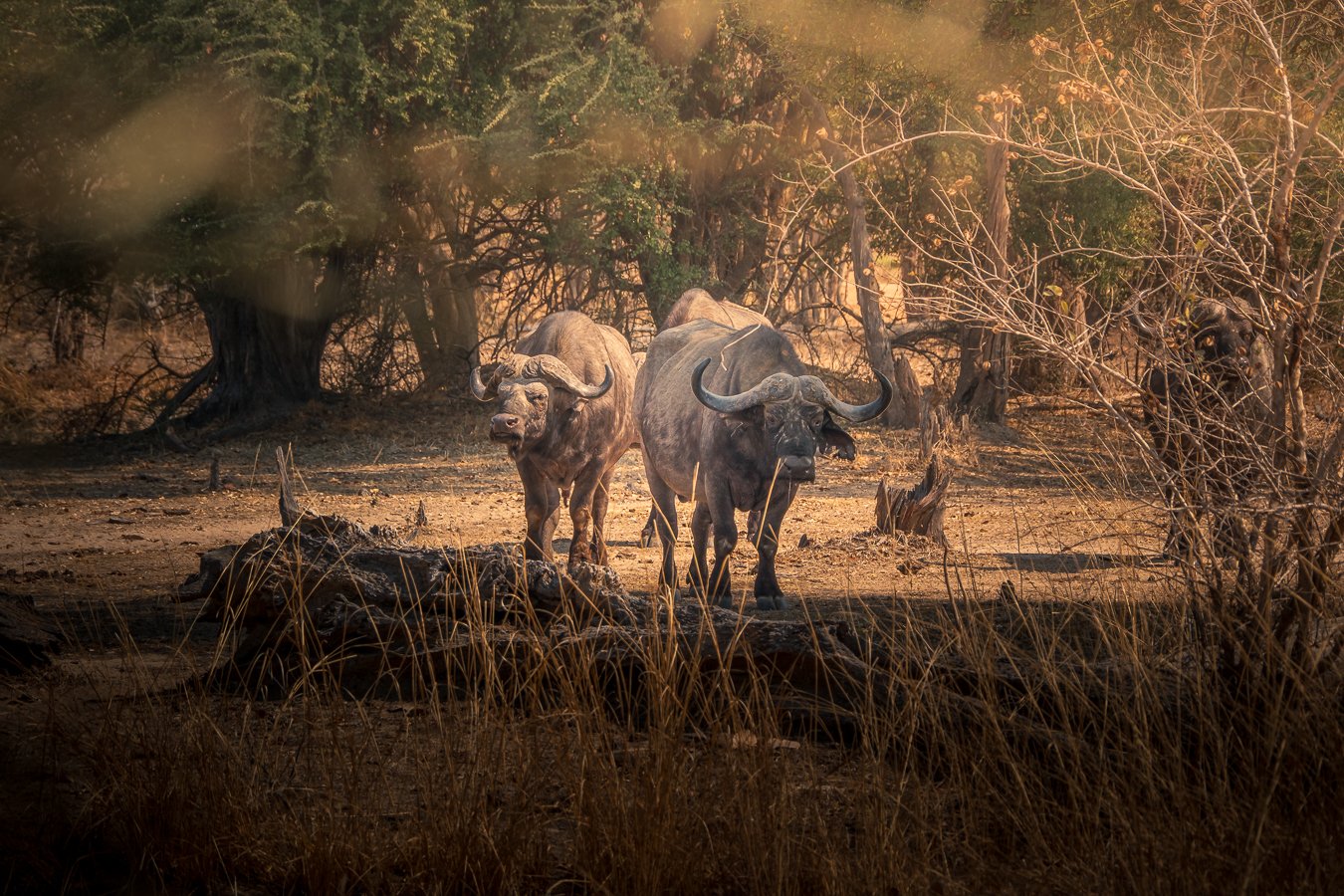
Buffalo looking through the trees in the South Luangwa National Park, Zambia. Taken with Fujifilm X-H2 w/ 70-300mm Fuji lens.
African Buffalo
Buffalo gather in large herds, especially around floodplains and lagoons. They are powerful, social animals and are frequently followed by oxpeckers.
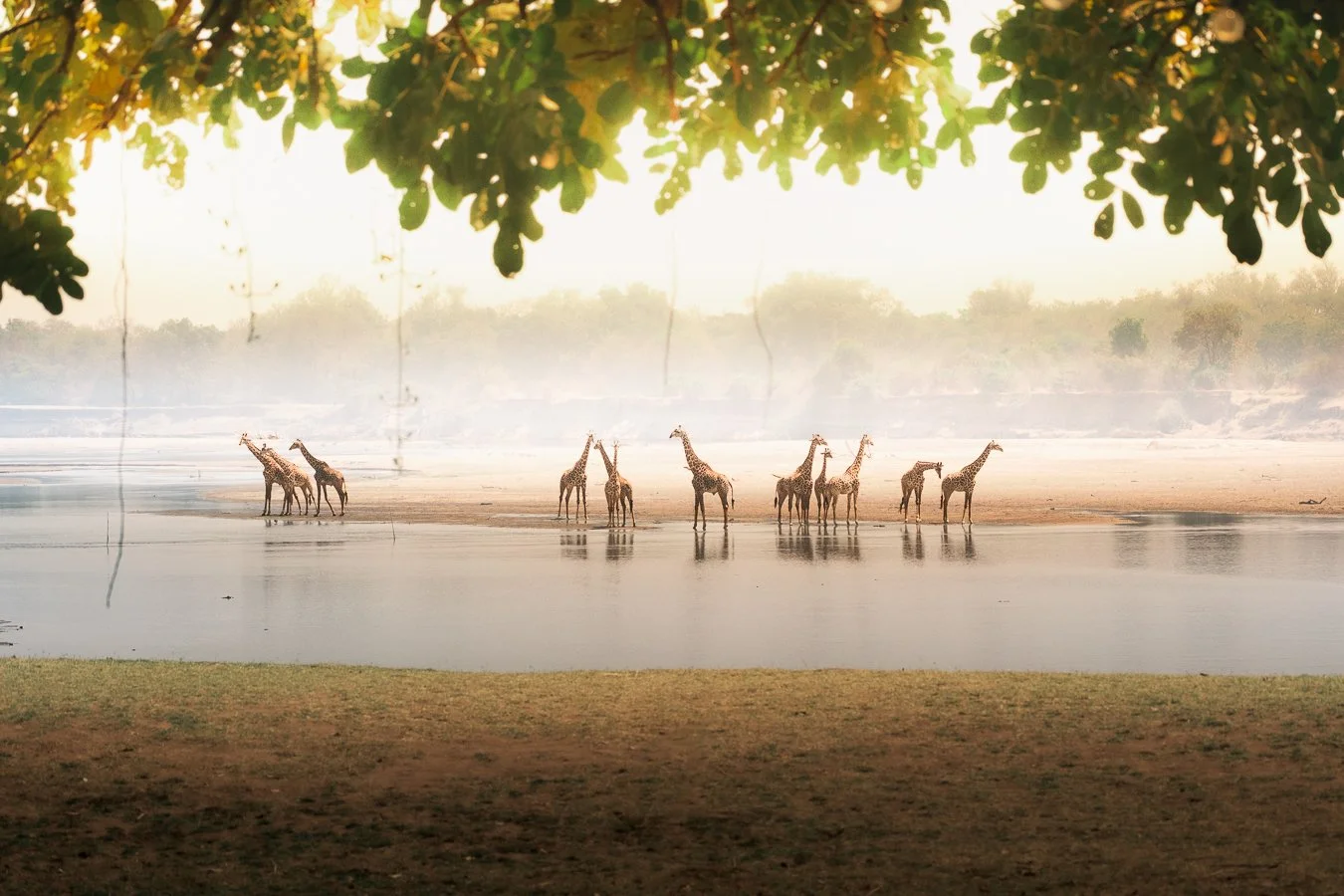
Giraffes in the midday sun in the South Luangwa National Park, Zambia. Taken with Fujifilm X-H2 w/ 16-80mm Fuji lens.
Thornicroft’s Giraffe
This distinctive giraffe subspecies is found only in the Luangwa Valley. It has irregular, star-shaped patches and is one of the park’s signature sightings.
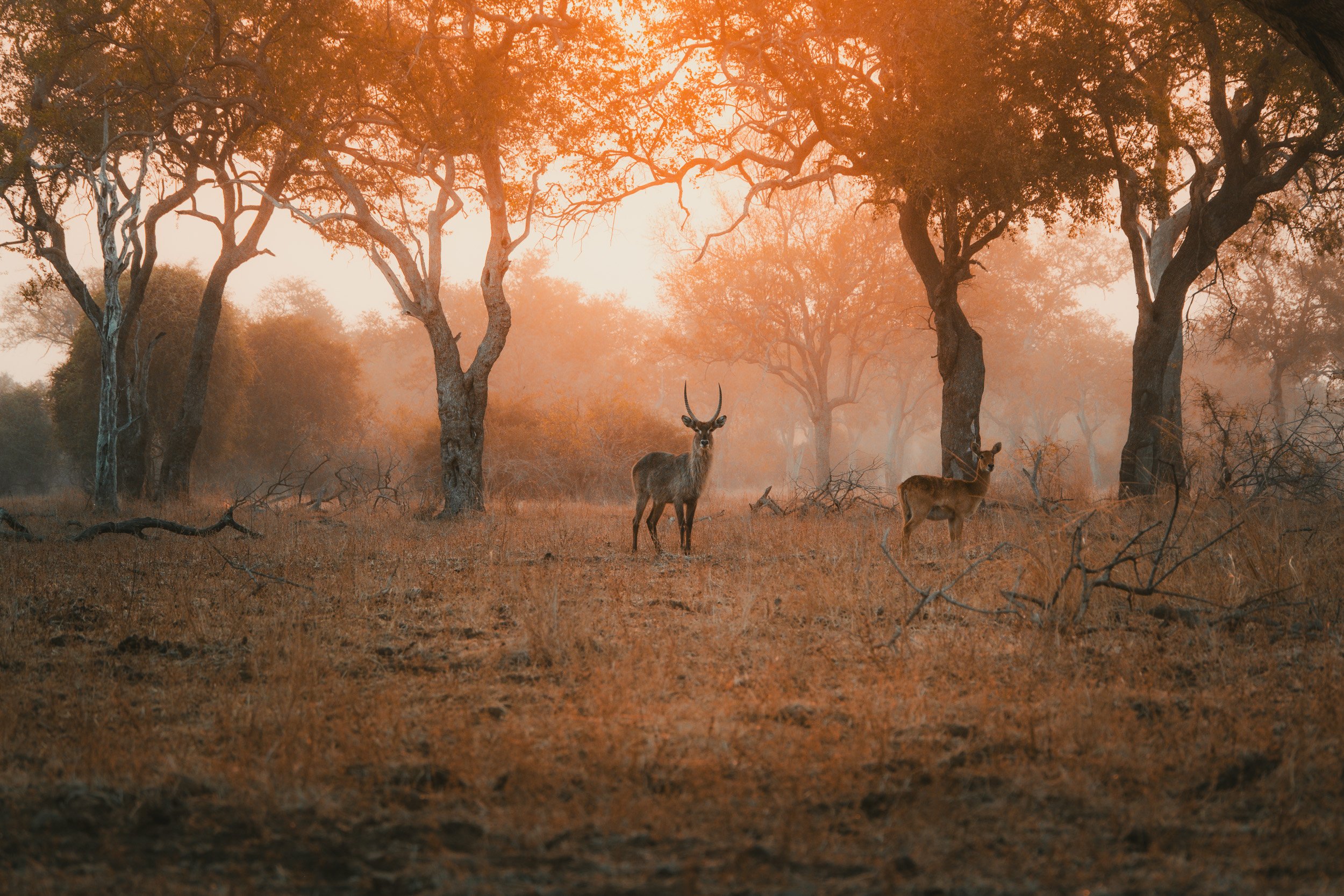
An antelope at sunrise in the South Luangwa National Park, Zambia. Taken with Fujifilm X-H2 w/ 16-80mm Fuji lens.
Zebra and Antelope
Common grazers and browsers include:
Crawshay’s zebra
Impala
Puku
Waterbuck
Bushbuck
Kudu
Eland
Warthog
Puku are especially characteristic of South Luangwa and are often seen in open, damp grassland near lagoons.
Predators
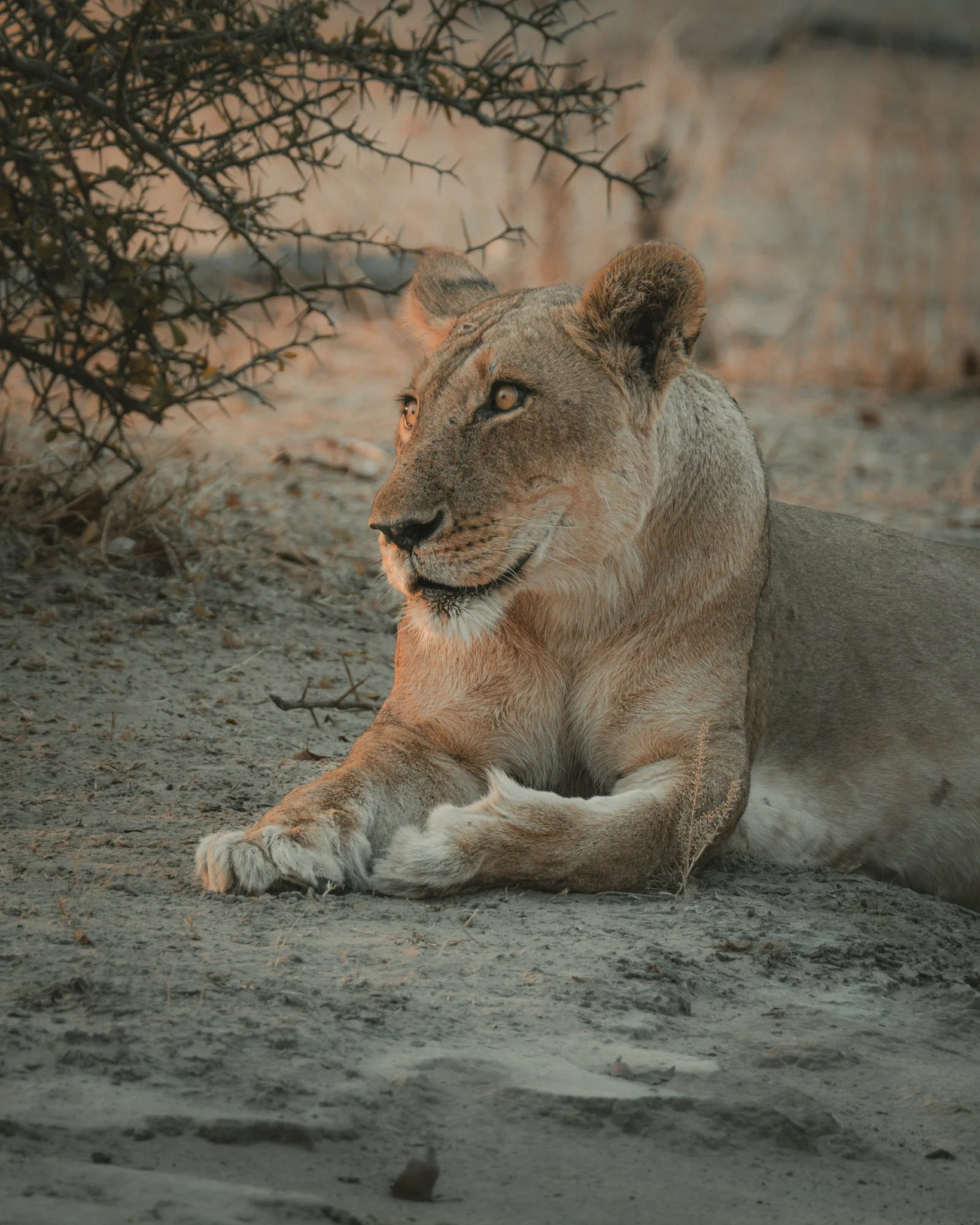
A lion enjoys a quiet evening in the South Luangwa National Park, Zambia. Taken with Fujifilm X-H2 w/ 70-300mm Fuji lens.
Lions
South Luangwa has a strong lion population. Prides are often found near grazing herds, and the park is particularly famous for lions that sometimes hunt during daylight or adapt their hunting to seasonal conditions.
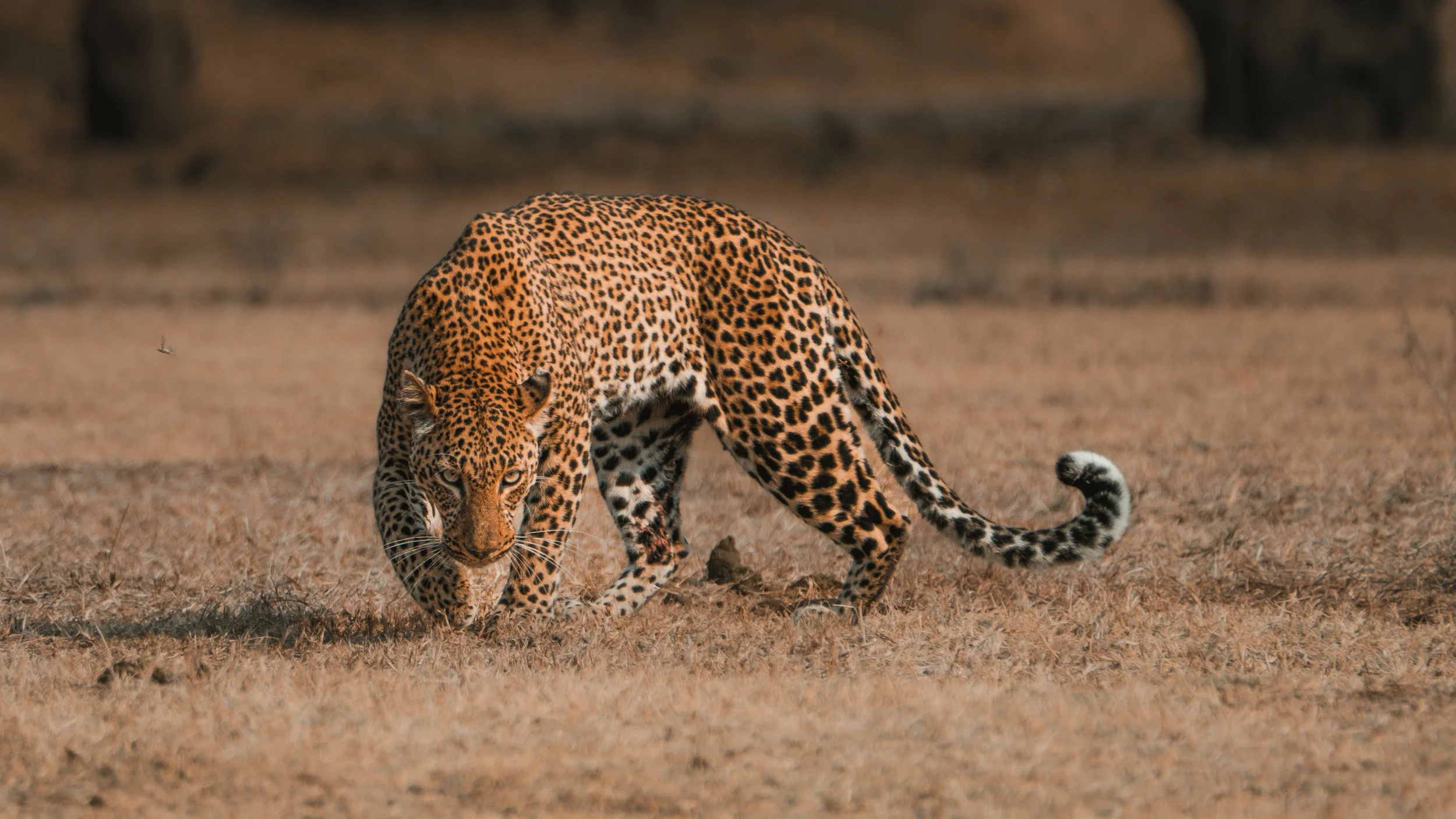
A perfect leopard sighting in South Luangwa National Park, Zambia. Taken with Fujifilm X-H2 w/ 70-300mm Fuji lens.
Leopards
The park is regarded as one of the best places in Africa to see leopards. They are often spotted in riverine woodland, resting in trees, moving through camps after dark, or hunting around lagoons.
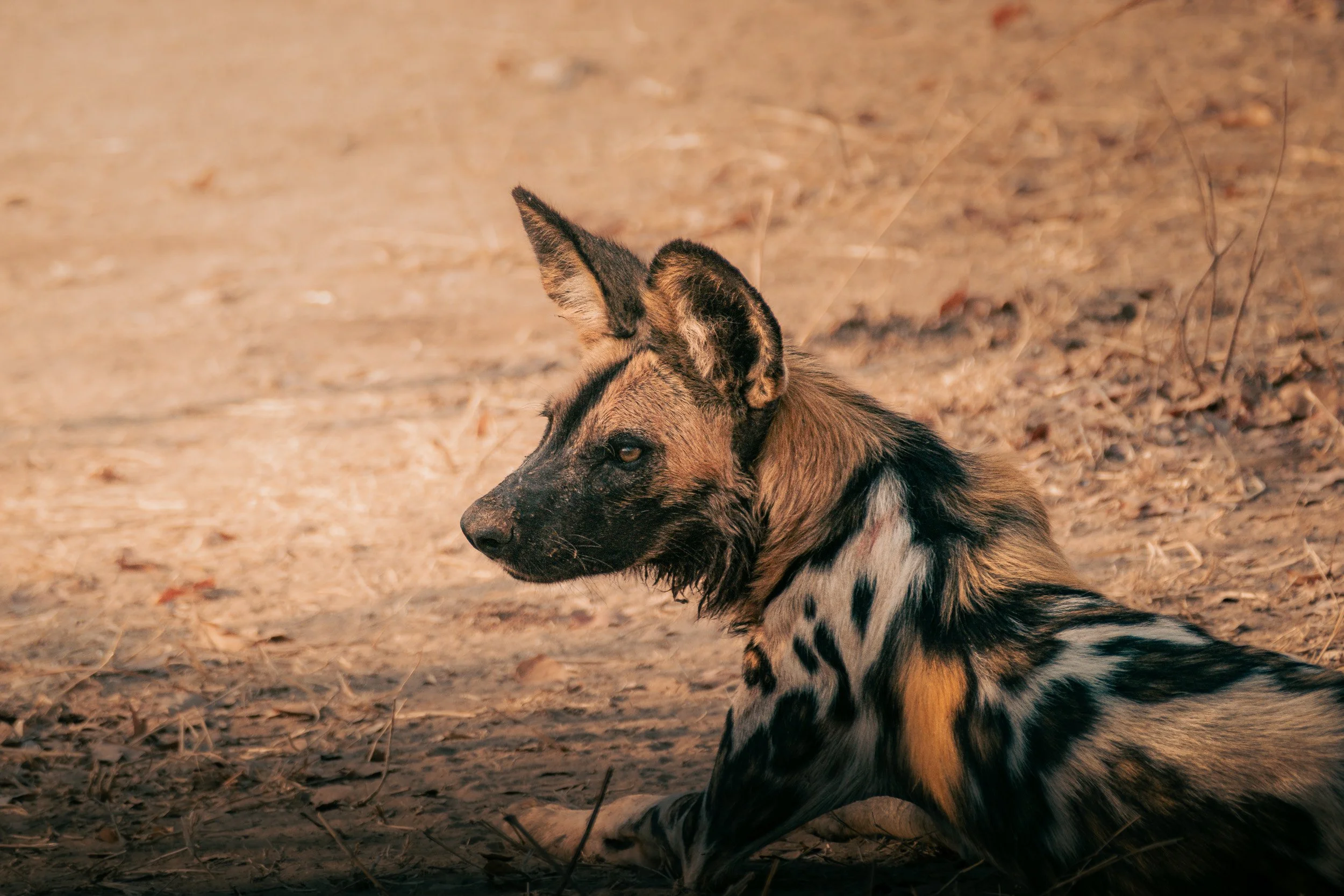
A wild dog looks over their shoulder in South Luangwa National Park, Zambia. Taken with Fujifilm X-H2 w/ 70-300mm Fuji lens.
African Wild Dogs
Wild dogs occur in the park and can occasionally be seen on safari, especially when packs are active across a particular area. Sightings are less predictable than lion or leopard encounters, but highly rewarding.
Spotted Hyenas
Hyenas are common, though often heard rather than seen. Their calls carry across the bush at night, and they play an important role as both hunters and scavengers.
Reptiles
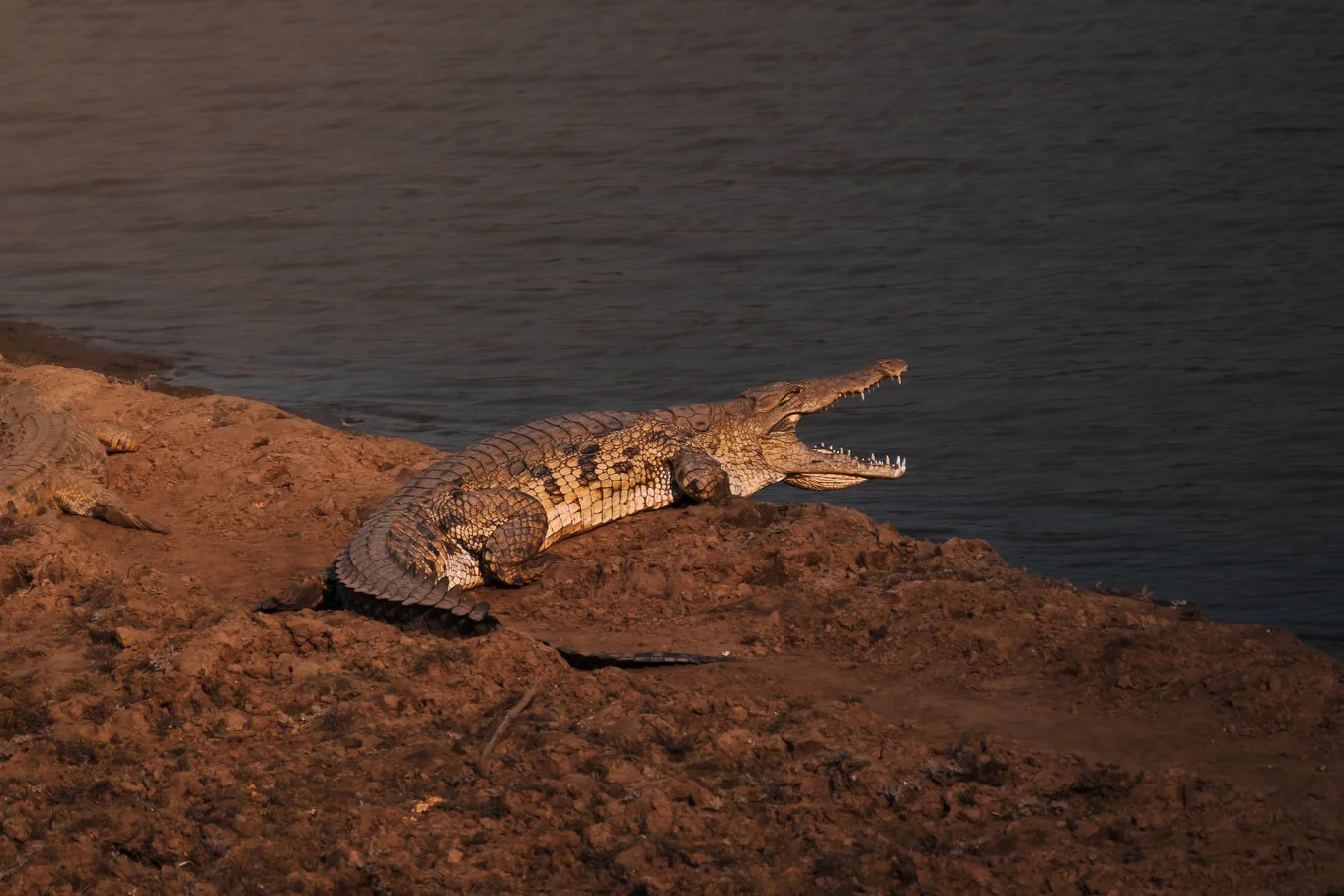
A Crocodile lounges in the hot afternoon sun in the South Luangwa National Park, Zambia. Taken with Fujifilm X-H2 w/ 70-300mm Fuji lens.
Nile Crocodiles
Large crocodiles bask along the Luangwa River and lagoon edges. They are most visible in dry periods when water levels are lower and animals concentrate along the banks.
Monitor Lizards
Water monitors and other lizards may be seen near rivers, ponds, and camp areas. They are powerful swimmers and opportunistic feeders.
Birdlife
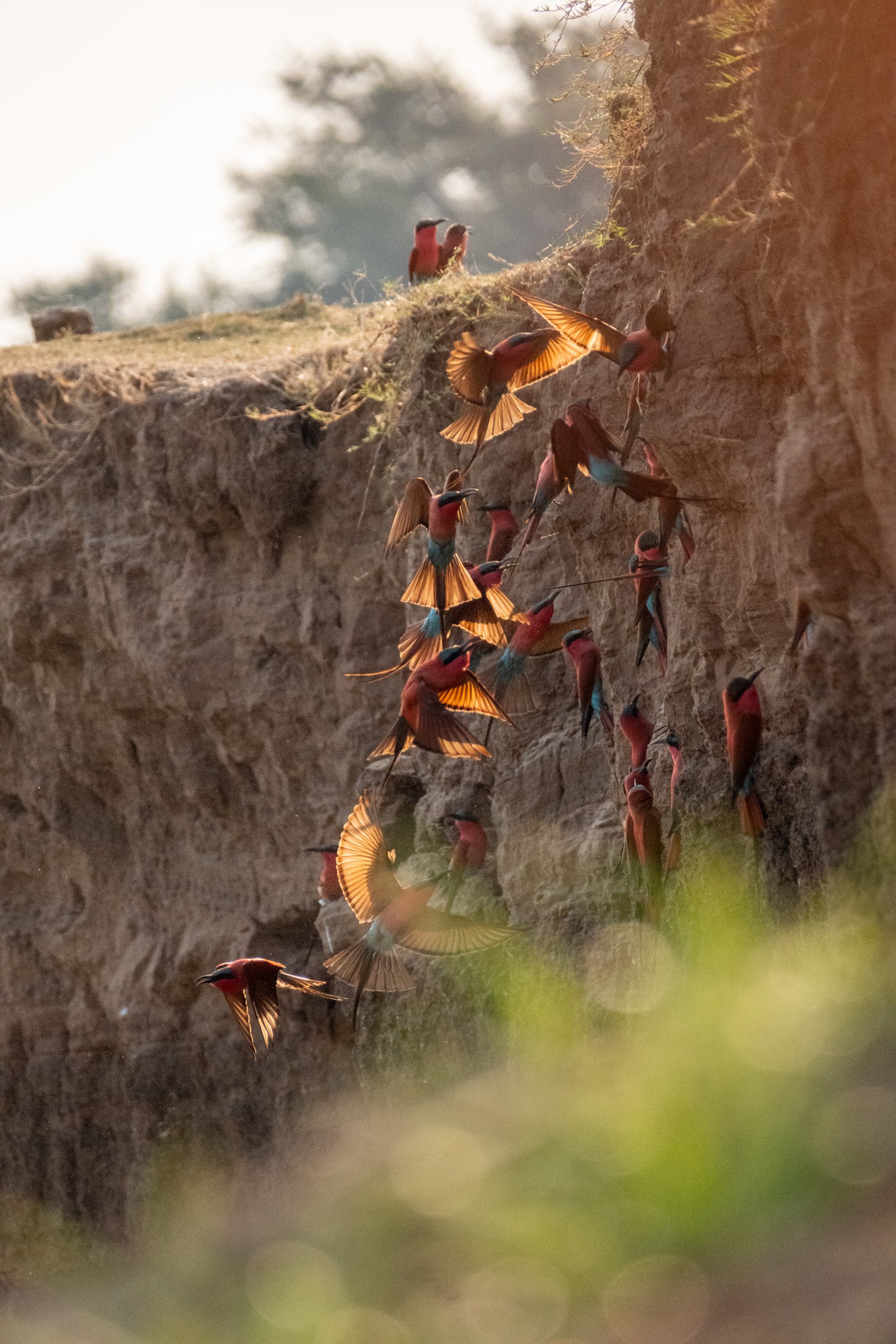
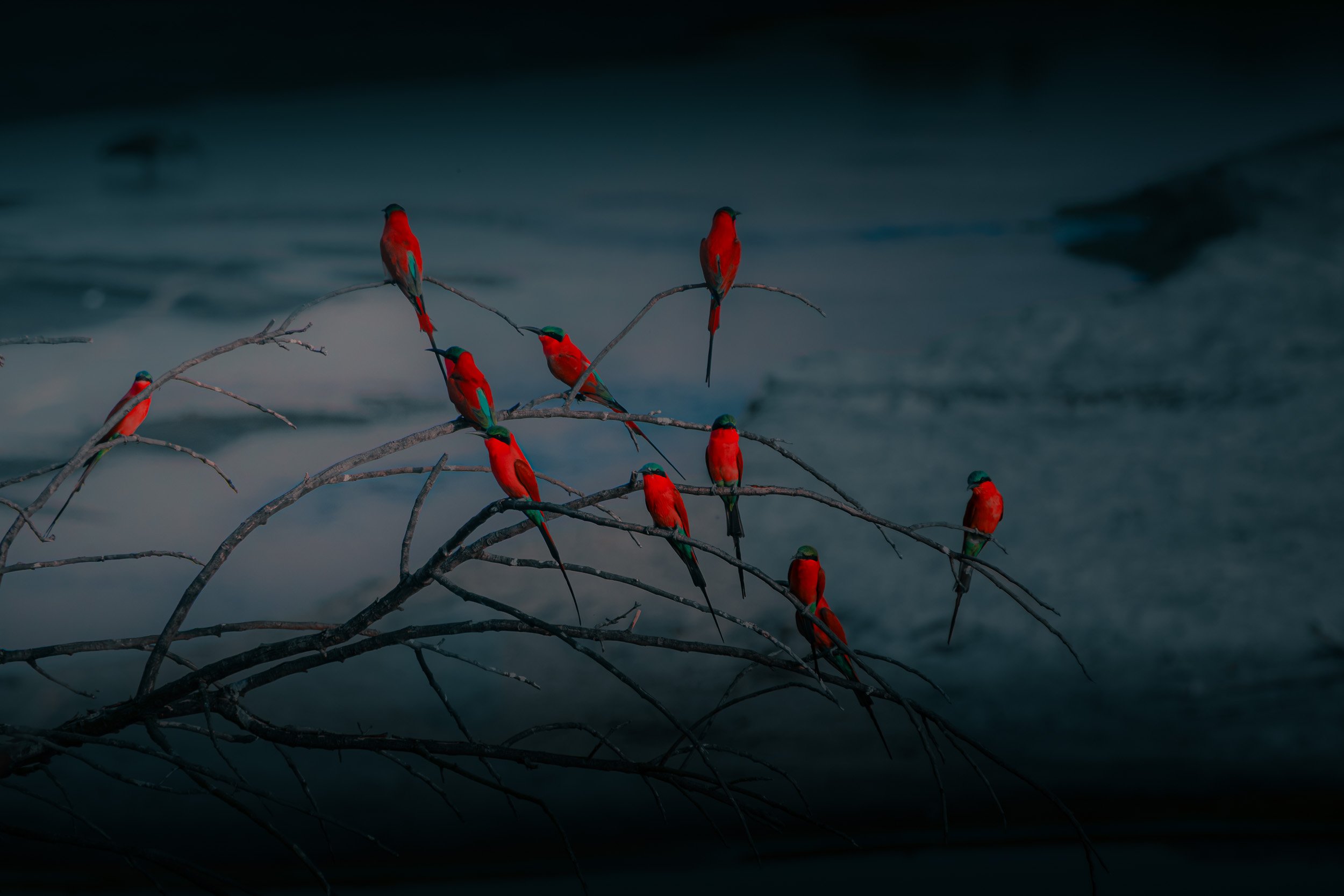
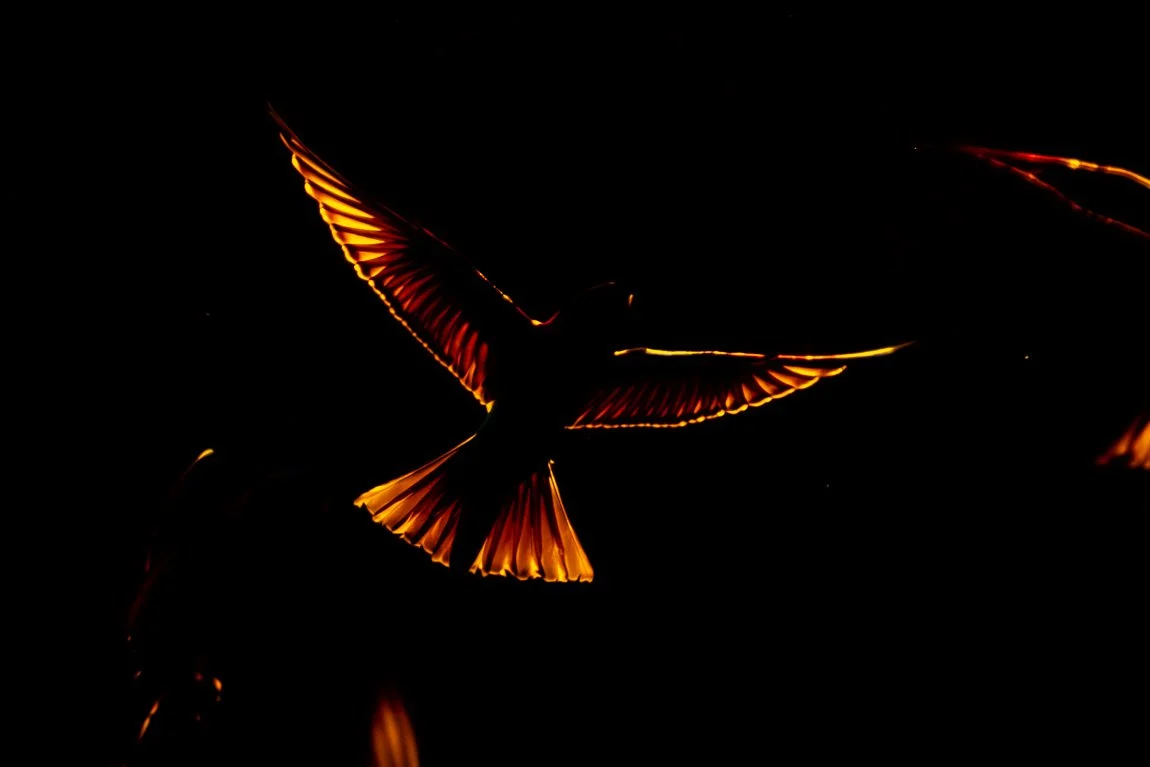
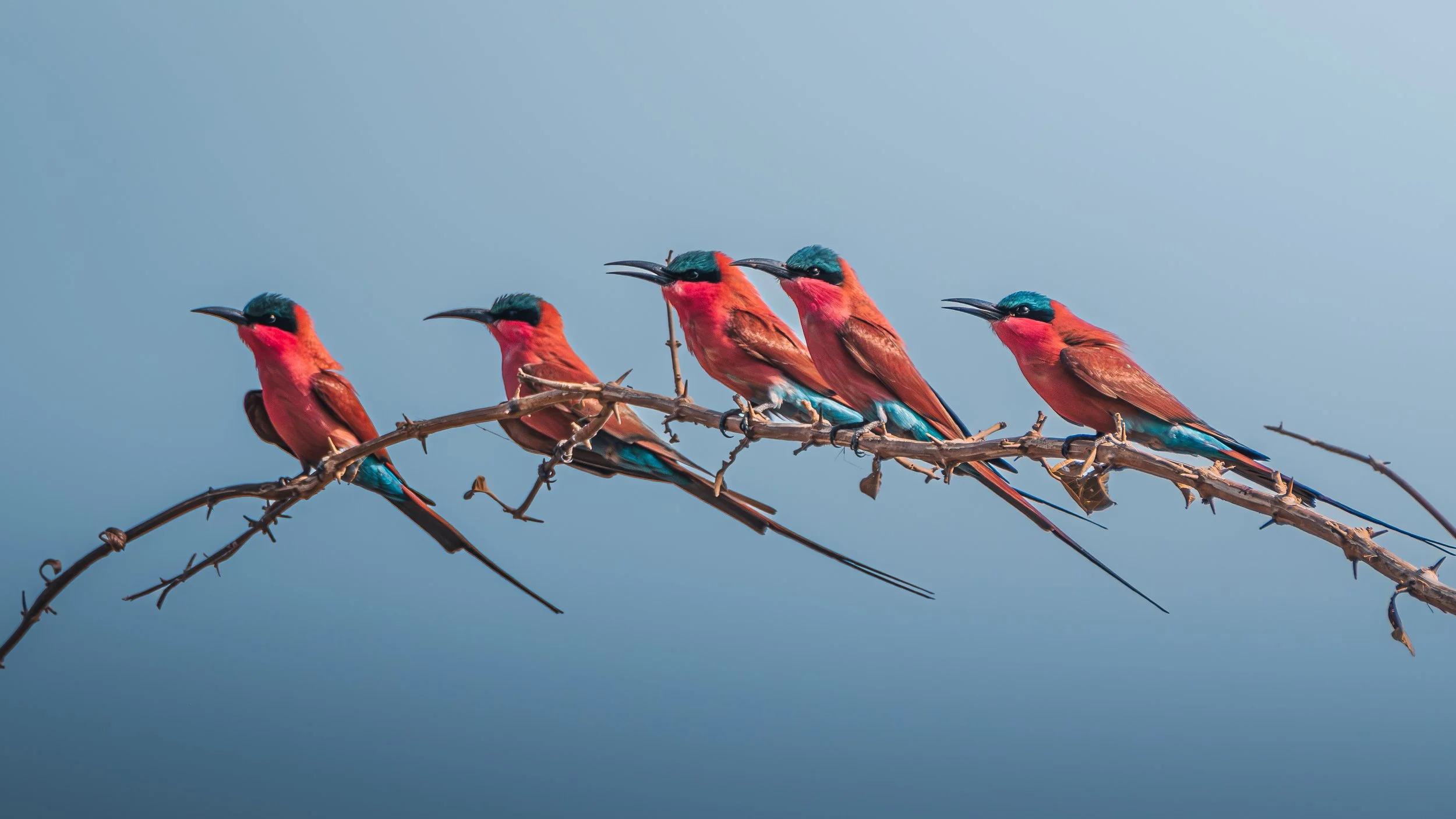
South Luangwa is outstanding for birding, with hundreds of recorded species. The green season, roughly November to April, is particularly productive because migratory birds arrive and the landscape becomes lush.
Notable species include:
African fish eagle
Southern ground hornbill
Carmine bee-eater
Lilian’s lovebird
Saddle-billed stork
Pel’s fishing owl
Malachite kingfisher
Various herons, egrets, storks, raptors, and kingfishers
The riverbanks can be especially active with bee-eaters, kingfishers, African skimmers, and wading birds.
Best Times for Wildlife Viewing
Dry season: May to October
This is generally the best period for concentrated wildlife viewing. As water becomes scarce, animals gather around the Luangwa River, lagoons, and permanent waterholes. Vegetation is thinner, making animals easier to spot.
Green season: November to April
The park becomes green and dramatic after rains begin. This period offers beautiful scenery, newborn animals, excellent birdwatching, and fewer visitors. Some areas may become harder to access due to rain.
Safari Experiences
South Luangwa is famous for both vehicle safaris and walking safaris. Guided walks offer a close look at tracks, insects, plants, birds, and smaller wildlife that may be overlooked from a vehicle. Night drives can reveal nocturnal animals such as leopards, hyenas, genets, civets, porcupines, and bush babies.
Responsible Wildlife Viewing
Keep a safe distance from all animals, especially elephants, buffalo, hippos, and predators.
Never leave a vehicle or camp area without your guide’s permission.
Avoid loud noises and sudden movements around wildlife.
Do not feed animals, including those that enter or approach camps.
Follow your guide’s instructions closely during walking safaris.
South Luangwa’s mix of river landscapes, dense wildlife populations, excellent leopard sightings, and walking-safari tradition makes it one of Zambia’s most memorable wilderness areas.