Photographing the Mountains and Forests of Washington’s Cascades
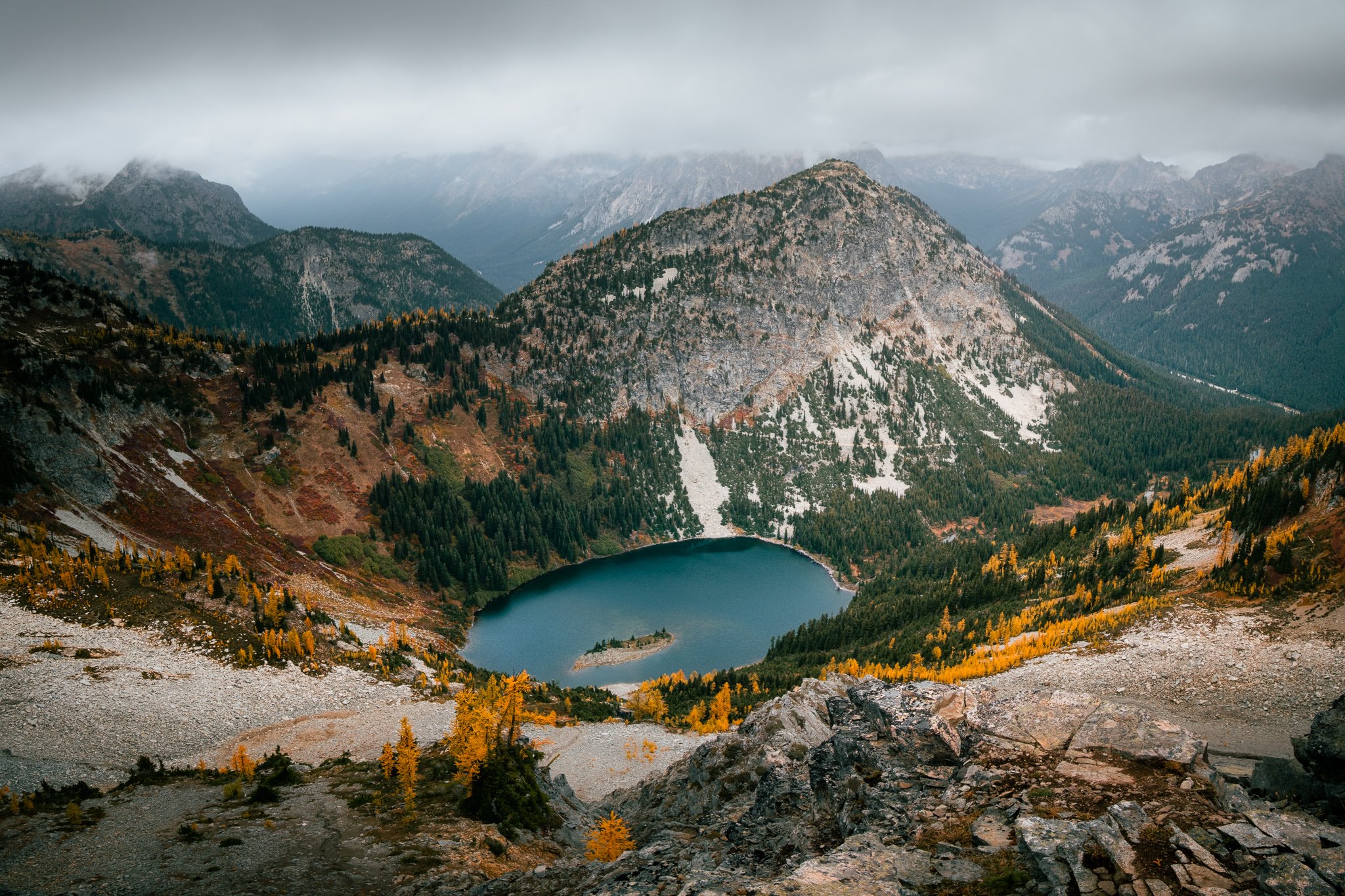
Washington’s Cascade Mountain Range is a dream destination for landscape photographers. Within a few hours of Seattle, the scenery changes from dense evergreen forests and rushing rivers to alpine lakes, rugged peaks, glaciers, and golden larch meadows.
The best part is the variety. You can photograph waterfalls beside the road, spend an afternoon exploring a quiet forest, or hike into the high country for expansive views of the mountains.
Four major routes:
Interstate 90
U.S. Highway 2
Highway 20
Highway 542
We also have an amazing resource in the Washington Trails Association (WTA), which acts as a sort of a land shepherd, and maintains our trails and keeps detailed reports and trail maps available.
I grew up hiking these mountains, and they are very special to me. A day spent among the trees and rocky spires is a day well spent.
Start with the Light
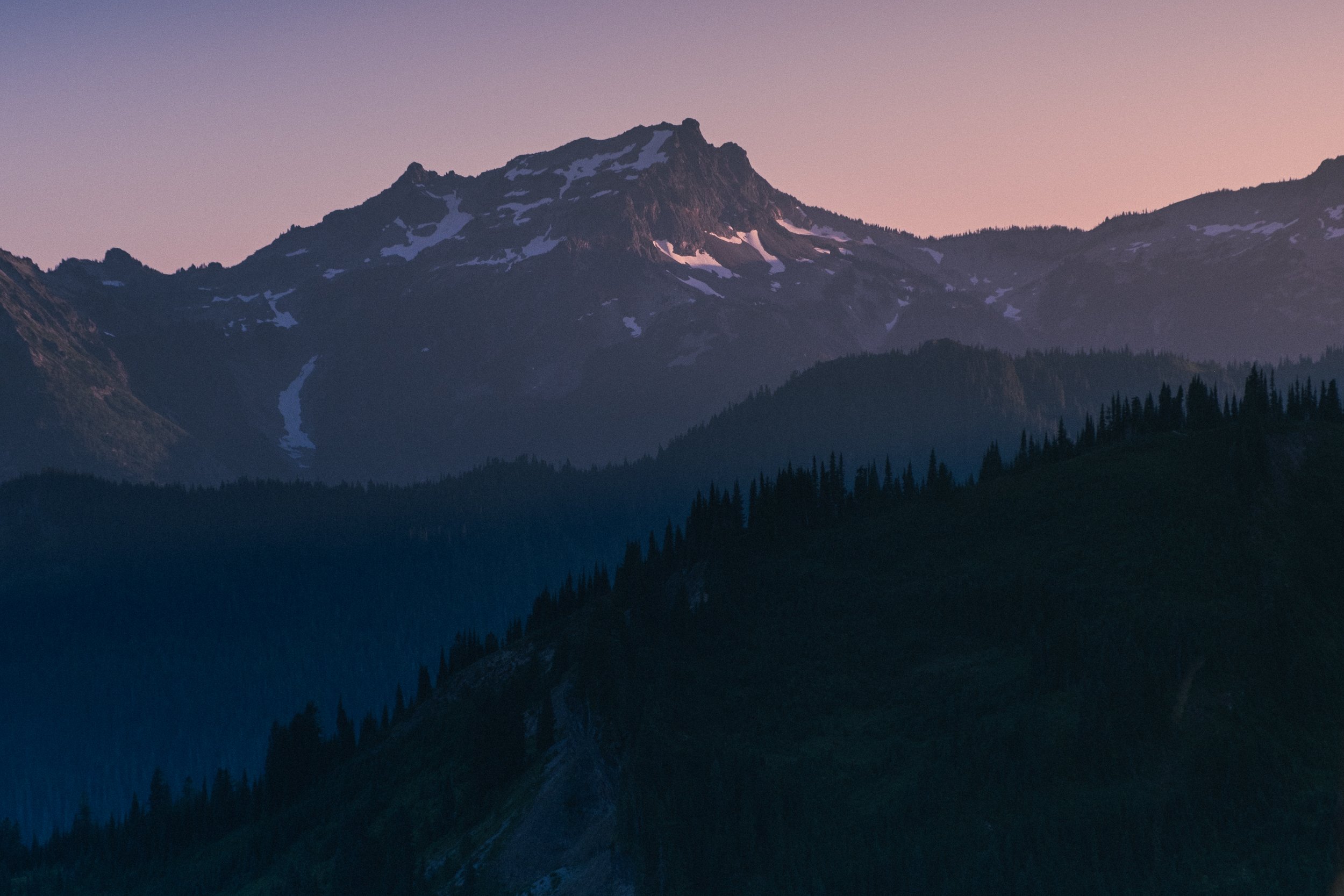
A dramatic sunset in the Cascade Mountain Range.
Mountain photography is largely about timing. The same scene can appear flat and ordinary in midday light, then become dramatic minutes later as the sun illuminates a ridge or breaks through the clouds.
Sunrise is often ideal for calm water, mist, and warm light on east-facing peaks. It also offers quieter conditions at popular locations. Sunset can bring alpenglow to granite walls, glaciers, and snow-covered summits.
However, do not overlook cloudy weather. Overcast skies soften contrast and are often excellent for photographing forests, waterfalls, moss, and streams. Light rain can create reflections and saturated colors, while low clouds can add atmosphere to mountain scenes.
Photographing the Mountains Along I-90
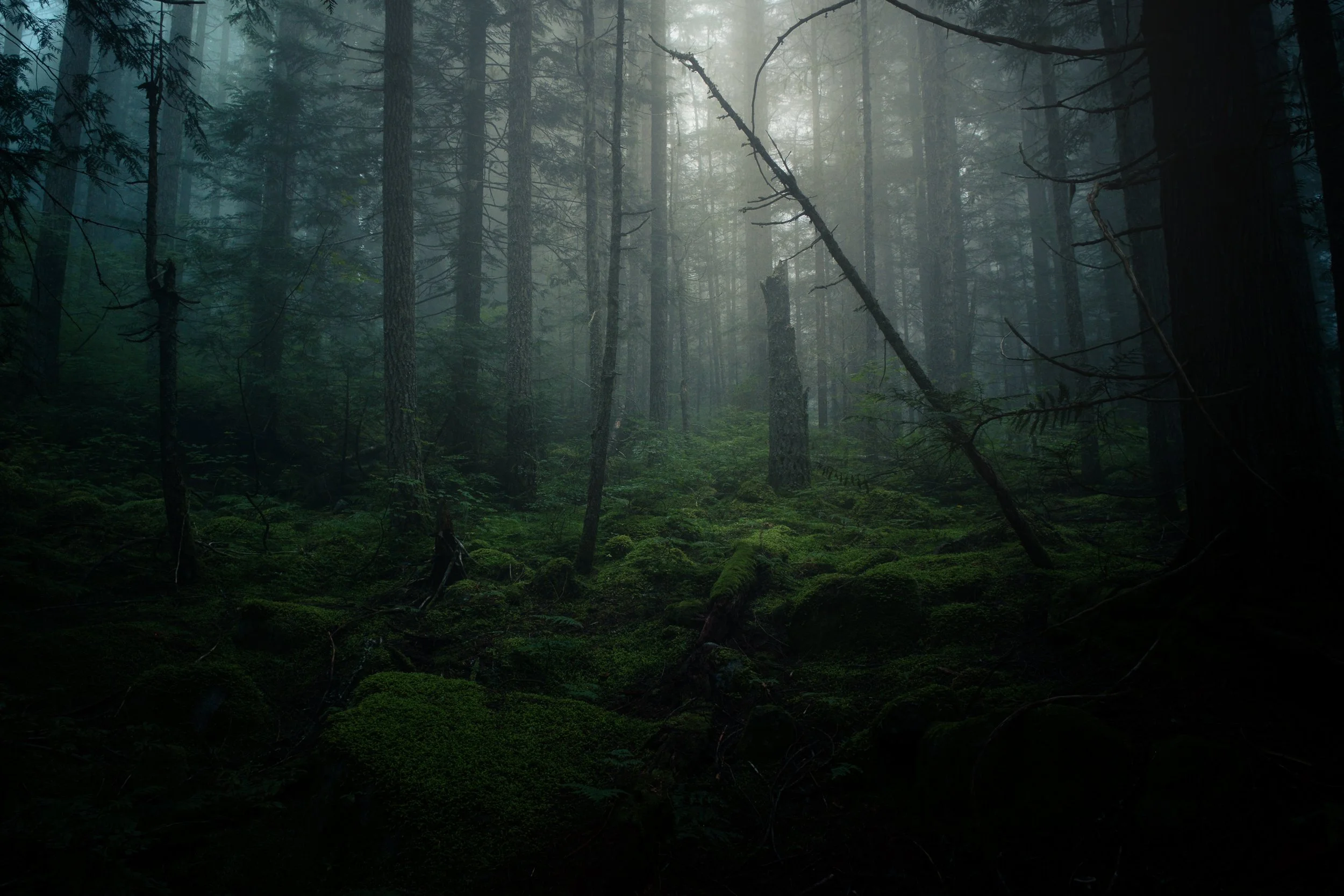
A moody forest scene in the Cascade Mountains, Washington.
Interstate 90 crosses the Central Cascades through Snoqualmie Pass and offers some of the most accessible mountain photography near Seattle.
At Gold Creek Pond, look for reflections of the surrounding peaks and forest. A calm morning is especially useful for mirror-like water. Include shoreline rocks, grasses, or a small tree in the foreground to give the image depth.
Keechelus Lake provides broad views of water, forest, and mountain slopes. Try both wide compositions and tighter telephoto images that compress the ridgelines. Early morning mist can separate the layers of the scene.
For more intimate landscape photography, explore the waterfalls and streams near the I-90 corridor. Franklin Falls, Twin Falls, and Denny Creek are good places to practice long exposures. A tripod allows you to use a slower shutter speed while keeping the surrounding rocks and trees sharp.
More demanding hikes near I-90 lead to locations such as Snow Lake, Granite Mountain, Mount Defiance, and Ingalls Pass. These areas provide more elevated views, alpine lakes, and rugged ridgelines PhotoSeek.
Exploring Forests Along Highway 2
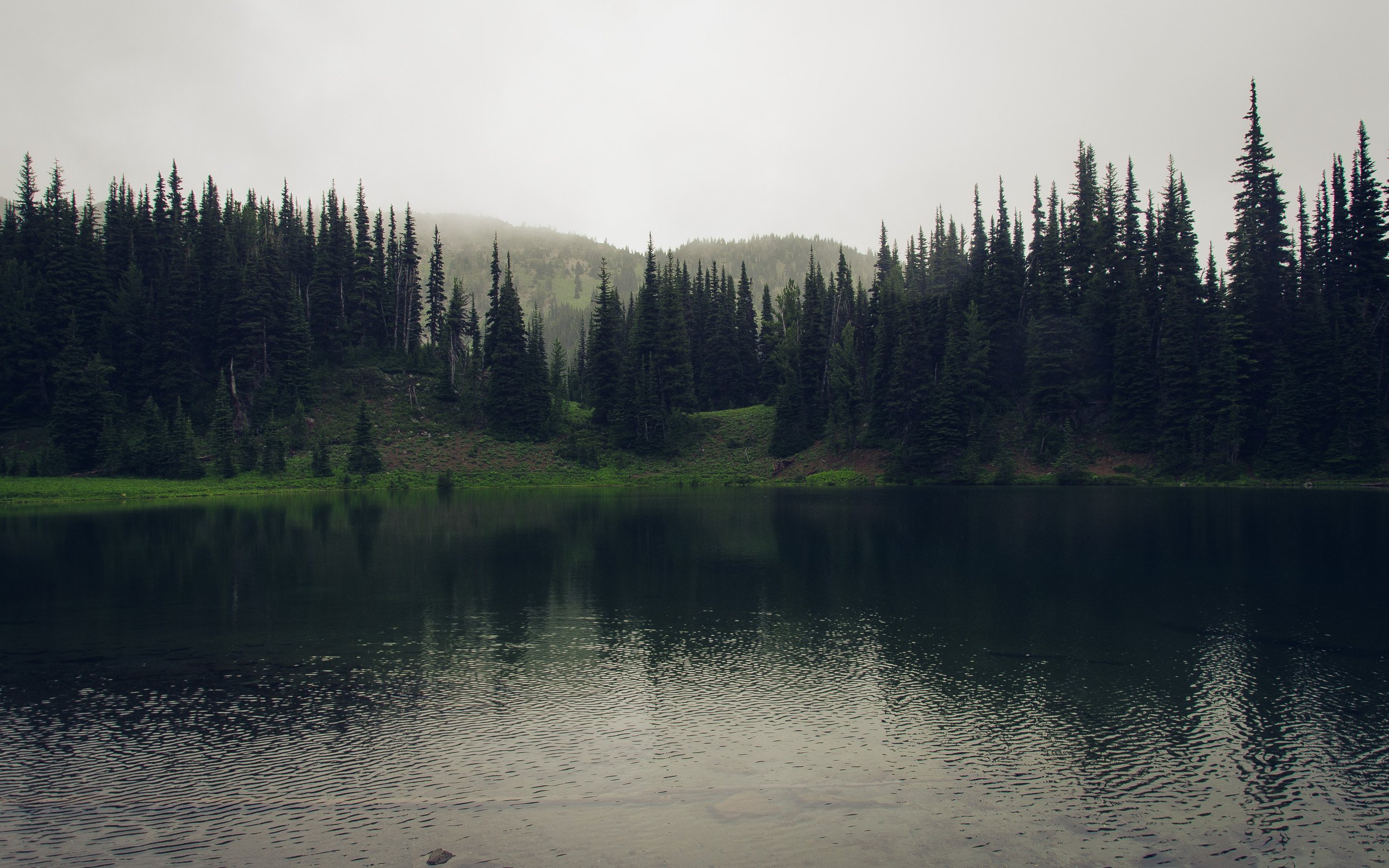
Forest and Lake near Highway 2.
U.S. Highway 2 follows the Skykomish River through thick forests before climbing toward Stevens Pass and descending toward Leavenworth. The route is especially rewarding for photographers who enjoy combining mountains with rivers, trees, and changing weather.
Along the Skykomish River, look for bends in the water, moss-covered rocks, ferns, and reflections of the surrounding forest. Rather than photographing only a wide river scene, try using the river as a leading line that directs the viewer into the frame.
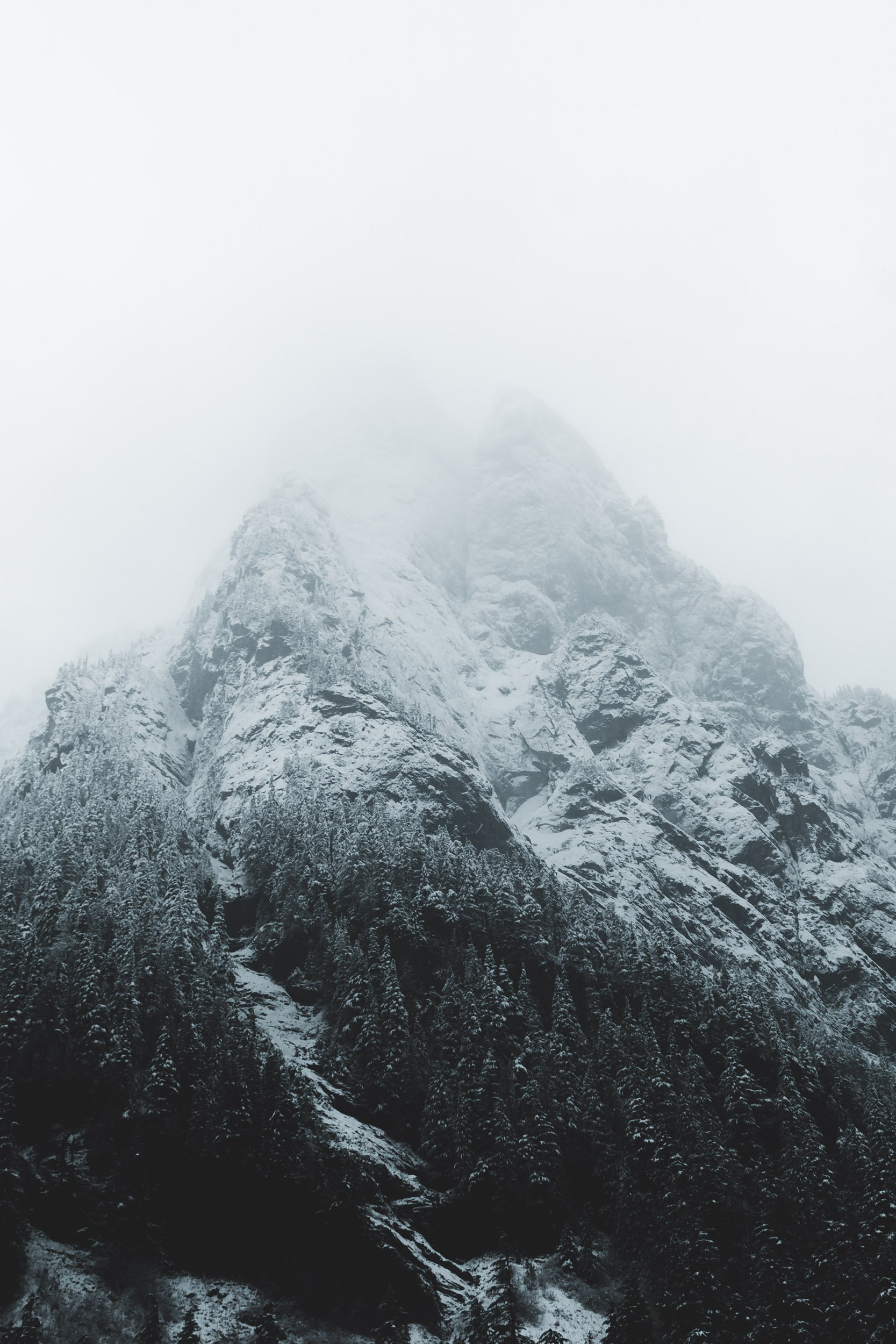
Barclay Lake under a recent snowfall.
Barclay Lake offers a scenic view toward Baring Mountain with relatively accessible shoreline compositions. A wide-angle lens can include the lake and forest, while a telephoto lens can isolate the mountain’s cliffs.
The Stevens Pass area is a strong destination in every season. Summer provides green forests and open trails, fall brings vivid color, and winter transforms the landscape with snow-covered trees and dramatic weather.
On the eastern side of the pass, Tumwater Canyon and the area around Leavenworth offer river scenes, granite cliffs, and colorful foliage. October can be particularly photogenic, when the trees turn yellow, gold, and red Cascade Loop.
Photographing the North Cascades on Highway 20
Highway 20, also known as the North Cascades Highway, offers some of Washington’s most dramatic mountain scenery. The road passes through deep forests, glacier-carved valleys, turquoise lakes, and high mountain overlooks.
Diablo Lake Overlook is one of the most recognizable stops. The lake’s blue-green color contrasts beautifully with the forested slopes and rugged peaks. Try visiting in the morning for softer light and possible fog over the water. A telephoto lens can be useful for isolating distant mountain forms.
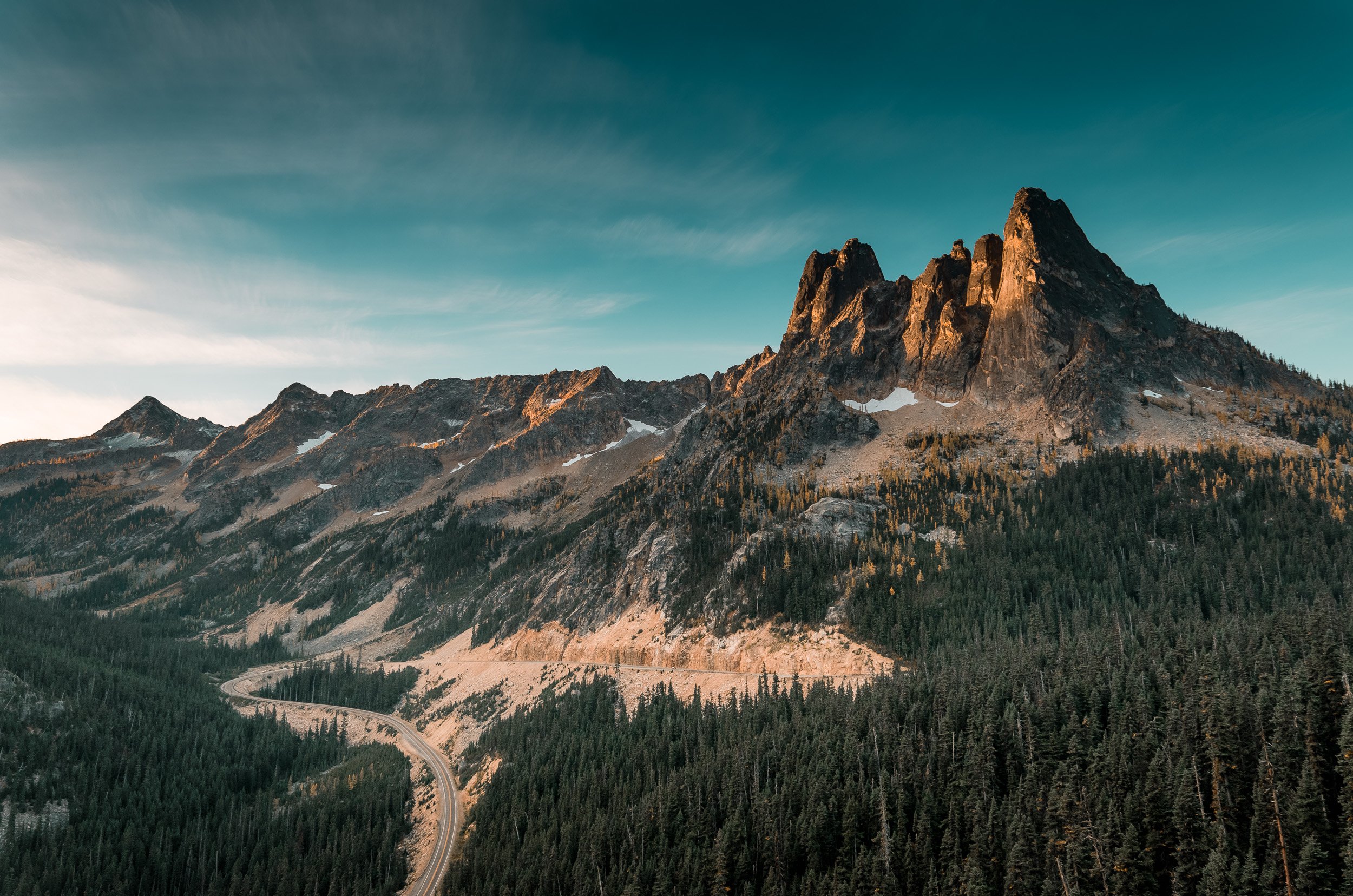
Mountain Pass Overlook.
At Washington Pass Overlook, look for compositions featuring Liberty Bell Mountain and the Early Winters Spires. Sunrise and sunset can produce warm light on the granite, while changing clouds create mood and scale.
For fall color, consider Maple Pass Loop, Cascade Pass, and nearby high-country trails. Golden larches and red alpine shrubs provide natural foregrounds for the surrounding peaks. The best fall-color window varies by elevation and weather, but late September through mid-October is often a productive period.
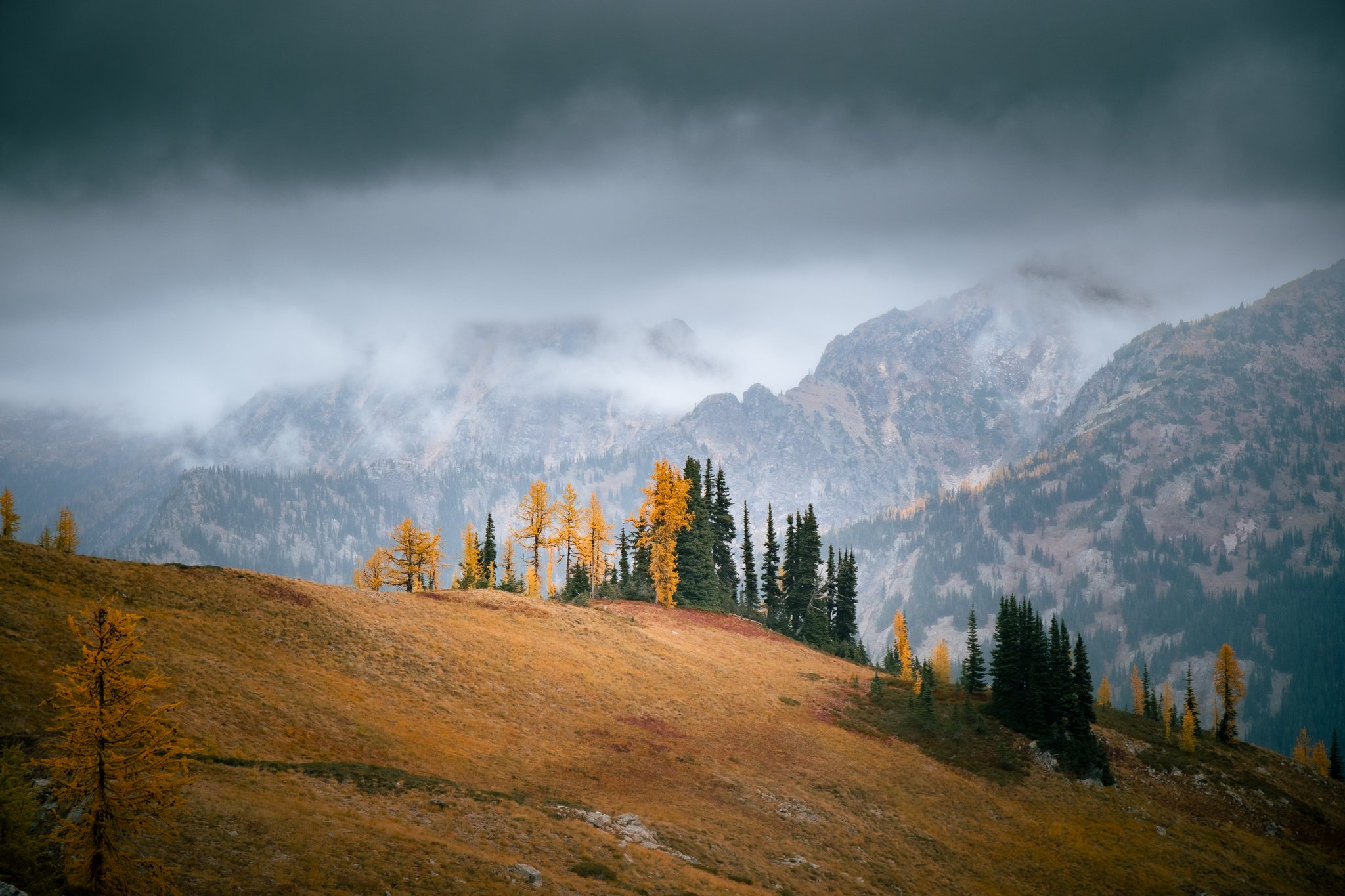
Larch trees in the North Cascades.
Mount Baker and Mount Shuksan Along Highway 542
Highway 542 leads toward Mount Baker and the Heather Meadows area. One of the most famous photographic locations is Picture Lake, where Mount Shuksan can be reflected in the water.
A calm evening can create a nearly perfect reflection. Arrive well before sunset if you want a clear view and time to explore different foregrounds. Try composing with wildflowers, shoreline grasses, or nearby trees rather than placing the mountain directly in the center of the frame.
At Artist Point, short trails provide views of Mount Baker, Mount Shuksan, alpine tarns, and surrounding ridges. Small ponds can create reflections when the wind is calm. Because the area is high in elevation, snow can remain even during warmer months, so check current conditions before traveling.
Use the Forest as a Foreground
A common mistake in mountain photography is placing the entire scene in the distance. Forests can provide the foreground, framing, and scale needed to make a mountain image more compelling.
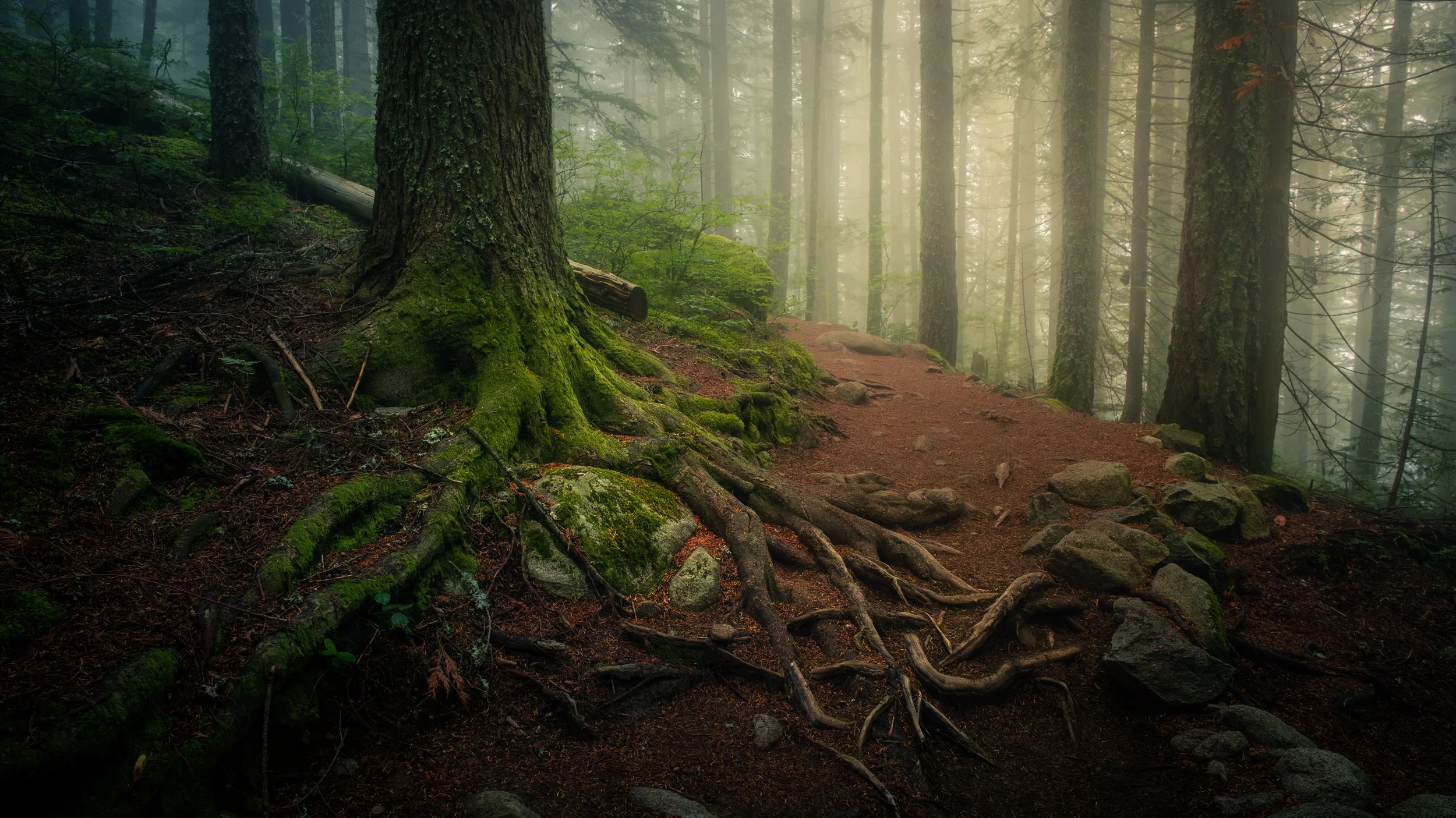
A forested trail with foggy trees in the backdrop.
Look for:
A trail leading through the trees
A lone evergreen framing a peak
Ferns or wildflowers beneath a mountain backdrop
A river or stream guiding the eye toward the distance
Fog separating layers of trees
Sunlight breaking through the canopy
A hiker or vehicle providing a sense of scale
Instead of photographing every element, simplify the composition. A telephoto lens can help isolate a single tree, ridge, or patch of light within a crowded forest.
Pack for Changing Conditions
Cascade weather can change quickly, especially at higher elevations. Even on a sunny morning, clouds, wind, rain, or cold temperatures may arrive later in the day.
A practical photography kit includes:
A zoom lens
A telephoto zoom
A sturdy but lightweight tripod
Extra batteries and memory cards
Lens cloths and rain protection
Polarizing or neutral-density filters
Headlamp for pre-dawn starts and hiking back after dark
Layers layers layers and waterproof clothing
Offline maps (https://www.alltrails.com/)
Roadside viewpoints may be easy to reach, but many of the best mountain scenes require hiking. Research trail conditions, parking, permits, seasonal closures, and weather before leaving. Roads such as Highway 20 can close during winter, and high-elevation routes may remain snowy well into summer.
Leave No Trace
https://www.nps.gov/articles/leave-no-trace-seven-principles.htm
The Cascade forests and alpine meadows are fragile environments. Stay on established trails, avoid trampling wildflowers, and keep a safe distance from wildlife. Do not place tripods or cameras in sensitive vegetation simply to improve a composition.
The most successful landscape photograph is not worth damaging the place that made it possible. Look for natural viewpoints, wait for better light, and allow the landscape to guide your composition.
Final Thoughts
Photographing the Cascades is not only about finding the highest viewpoint. Some of the strongest images may come from a quiet river, a fog filled meadow, a lake reflection, or a single sunlit tree beside the highway.
Plan around the light, explore beyond the obvious viewpoint, and give yourself time to notice the smaller scenes. Mountains provide the drama, but forests, rivers, weather, and changing light give the photograph its character.