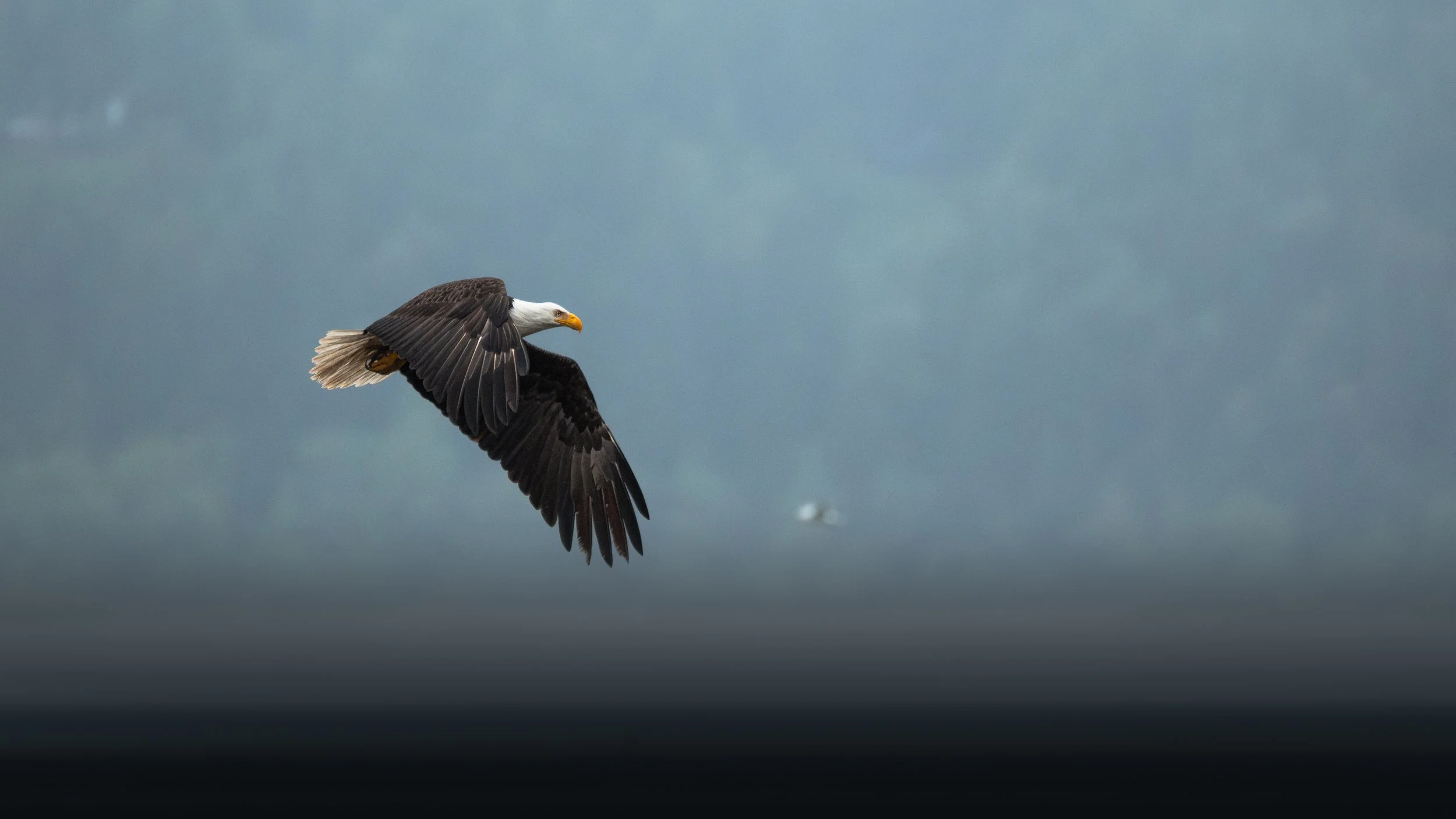
A bald eagle soars along a foggy river in Washington State.
Interested in getting shown the best spots and the best photo techniques to see bald eagles by a local wildlife photographer? Here is a link to my photography workshops for 2027: https://www.quinnaebiphotography.com/bald-eagles-of-washington-state-photo-workshop
Where To See Bald Eagles in Washington State
If you head to the shorelines of the Washington Coast and the Puget Sound, you can marvel at these beautiful birds year round. With our conservations efforts in the past few decades, our eagle population has been steadily growing.
To start, there is a large number of eagles hanging and feeding on the salmon around the Nooksack and Skagit Rivers. This peaks in December - January. There are many pullouts, parks, and campsites along these riversides, and if you spend a day exploring these areas, you will most definitely see them perched in trees or soaring high above the forest canopy.
Howard Miller Steelhead Park in Rockport, WA offers eagle informational walks on weekends during the winter season. These park offers RV camping, and some trails along the river that are great for spotting eagles. Depending on the water level, they are known to feed on the shorelines and fight each other over carcasses. I recommend early morning walks because that is when they are most active.
A road trip around Whidbey Island or any other island in the Puget Sound would get you great viewings as well. It is almost a guarantee you will see one perched in the trees if you take any of the ferry boat routes.
There are also some great beaches and pullouts along the peninsulas, Northwest of Olympia. Early morning, low tide will give you great results with eagle activity.
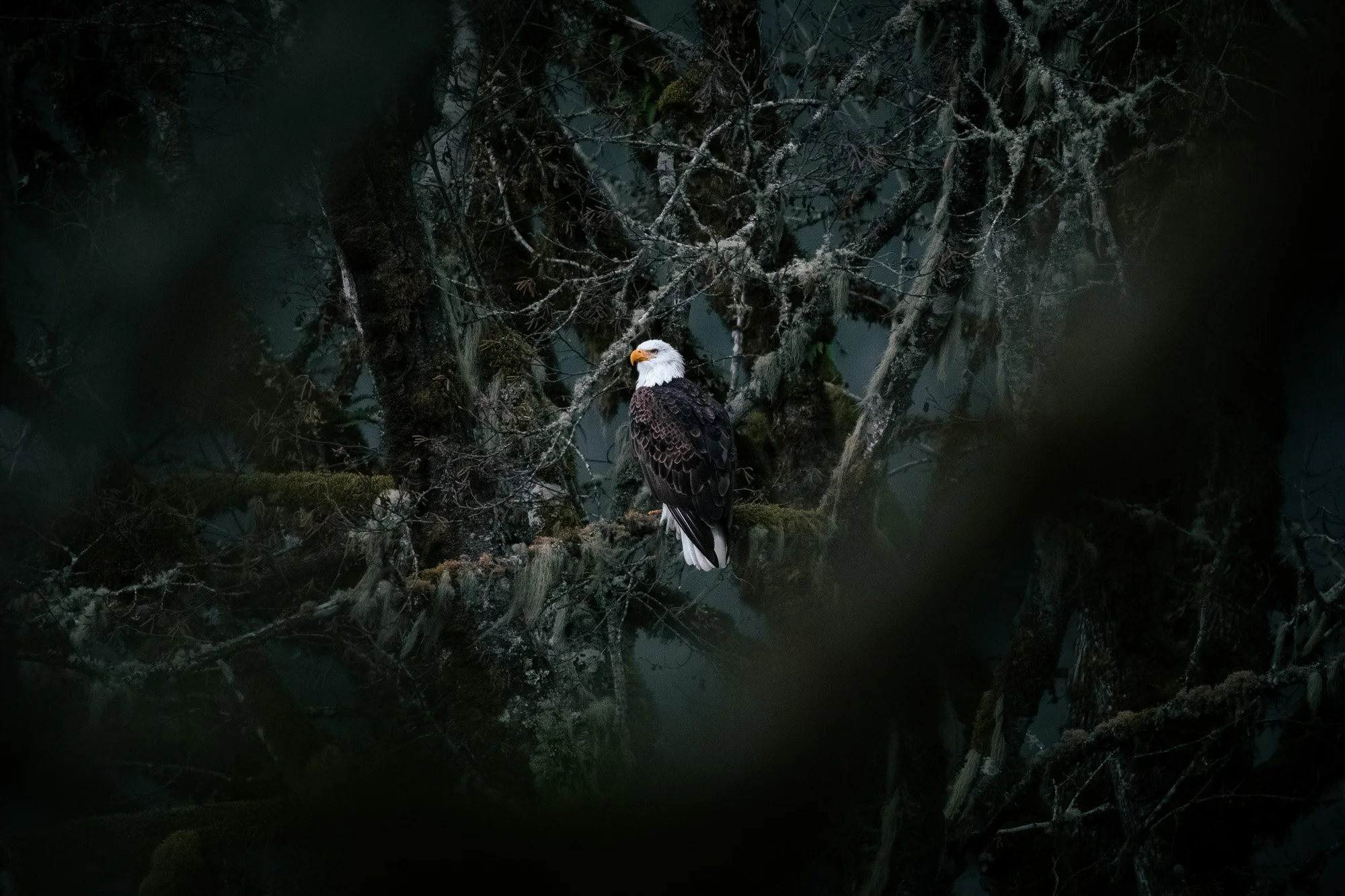
Bald Eagle at Howard Miller Steelhead Park in Rockport, WA in late December. Taken with Fujifilm X-T5 w/ 150-600mm Fuji lens.
What to Bring to See Bald Eagles
With winter viewing, it is always good to be extra prepared. These are cold months here in the Pacific Northwest. A good start would be a warm base layers, rain jacket, gloves, warm hat. Although it’s possible with some of the pullouts in the area, you are most likely not going to be getting good sightings from your car. You need to walk a bit to find the good stuff.
For bald eagle photography, a bare-minimum lens would be something in the 300-400 range. I had a 600mm and was still struggling for reach one of the days because the river was high and the eagles were not hanging around the beaches.
A 100-400 with a 1.4 converter would be fine, but if possible, I recommend 600mm.
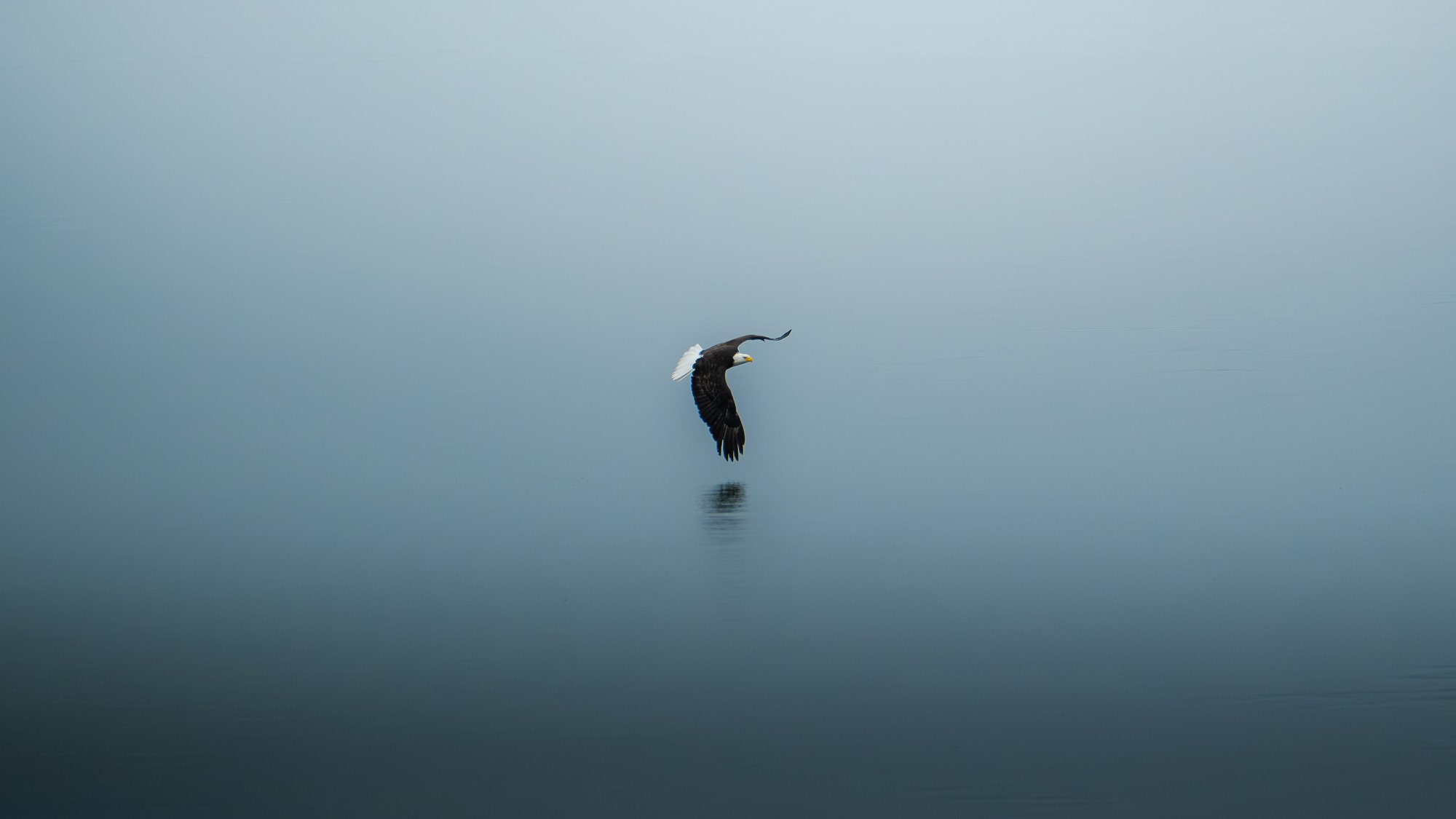
Bald Eagle flying along the coastline at a beach in Seabeck, WA.
Photographing Bald Eagles
Best practices for eagle or bird in flight photography would be to increase shutter speed to freeze motion, so for these birds, about 2500-3000 works. Aperture stopped all the way down as low as your lens allows, for most shots, though it is important to experiment a bit and check focus, sometimes a f5.6, f6.3 is necessary to get full eagle in focus. If you want to get more of the surrounding landscape in the photo, you will go up a few stops to f8. With these shots, the eagle will probably be perched, so you can bring your shutter speed down a bit. For ISO, you can use auto ISO, which is what most photographers. I like to set my ISO to a front dial and adjust it as needed. For bursts, for the most part, will only need one or two different ISO settings.
Practice following birds in flight with your lens, it is not easy. I recommend going to a local park to photograph ducks or seagulls to practice.
I usually use a burst mode (CH or CL if you don’t want hundreds of photos filling your card). The higher, the better if you want more selection with wing poses. 10, 15, and some cameras even go up to 40 or so per second. Crazy times! We are blessed with our modern camera gear, and it’s important to remember that.
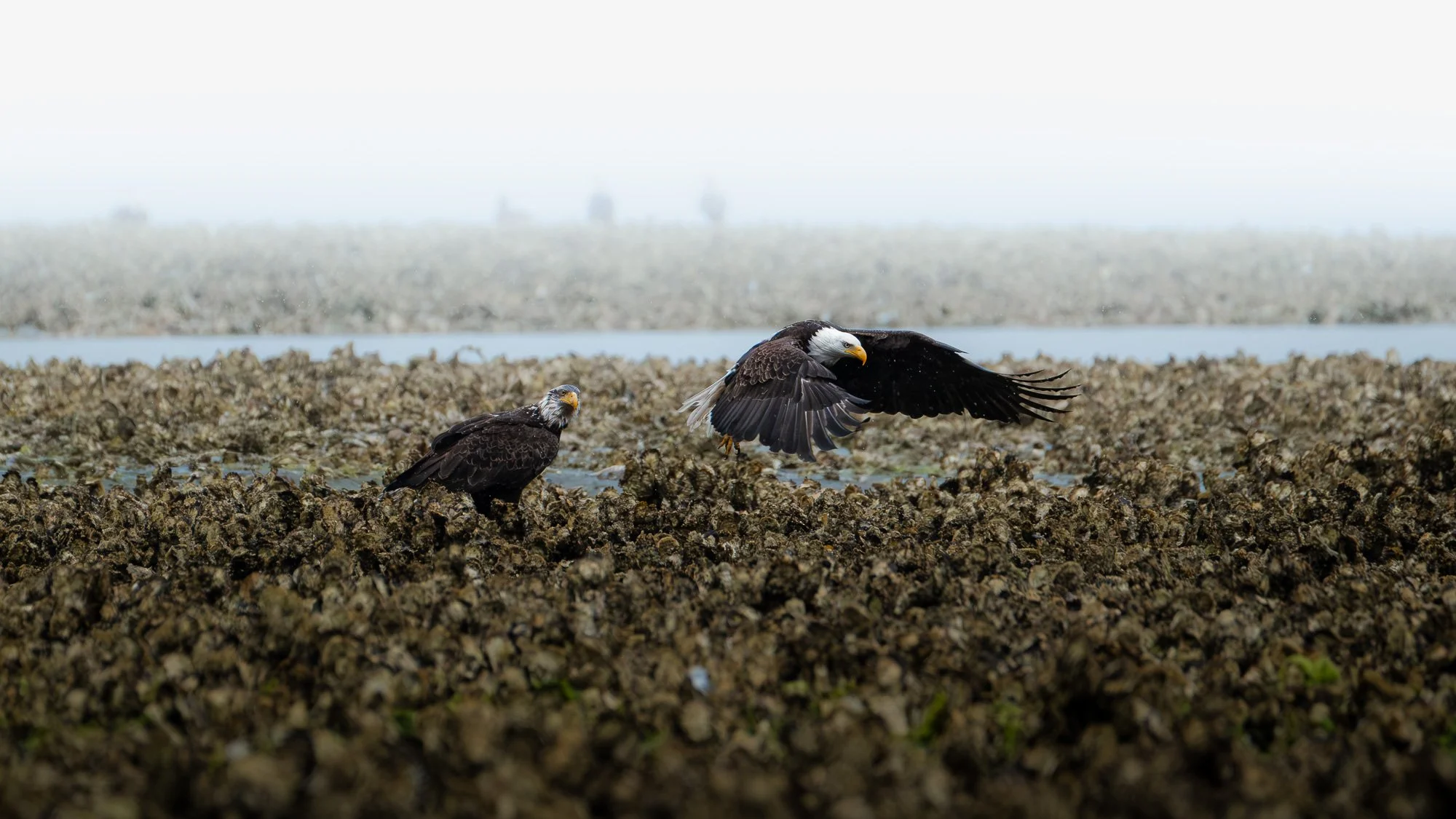
Bald Eagles in the early morning at Seabeck Washington.
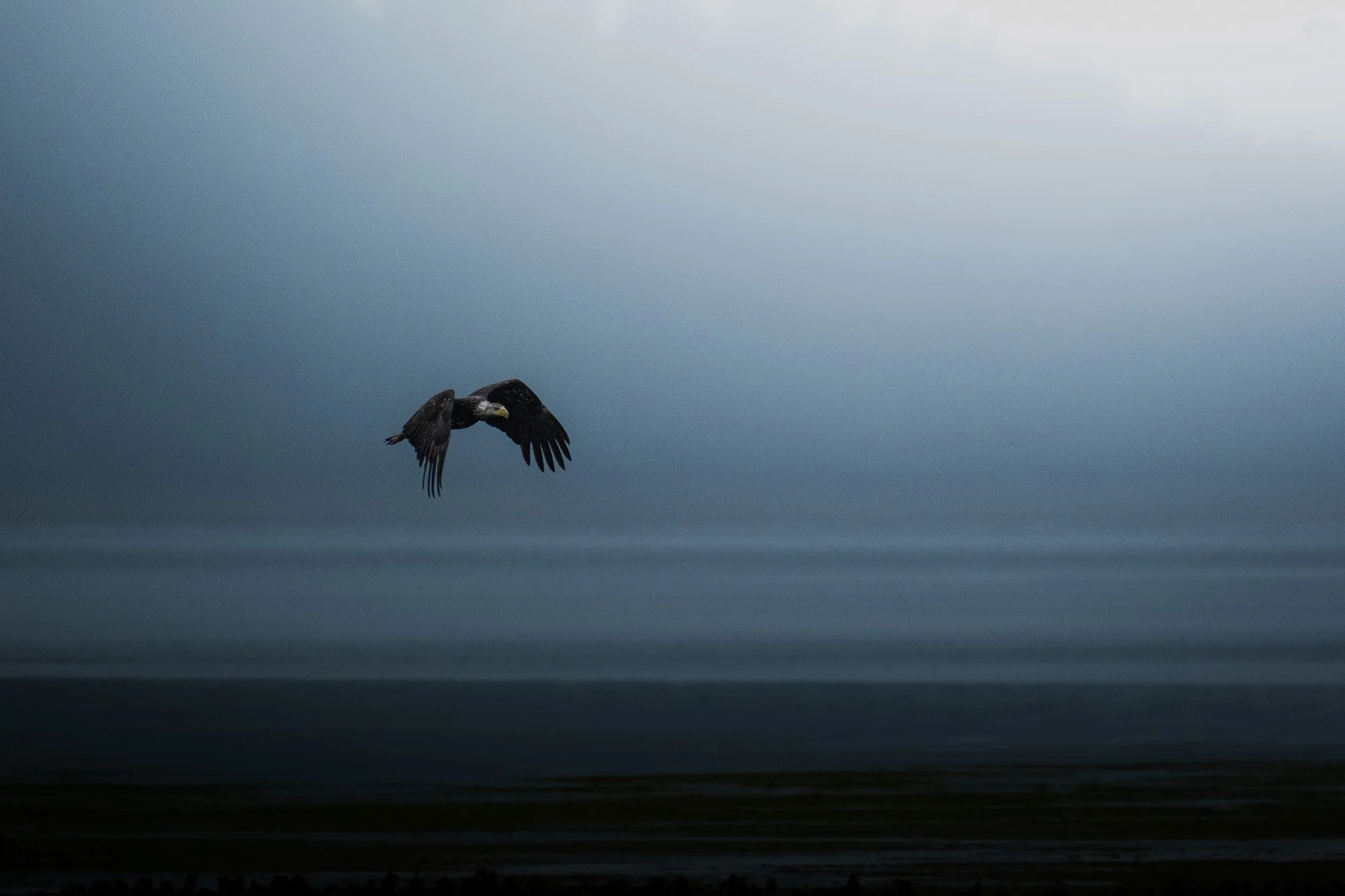
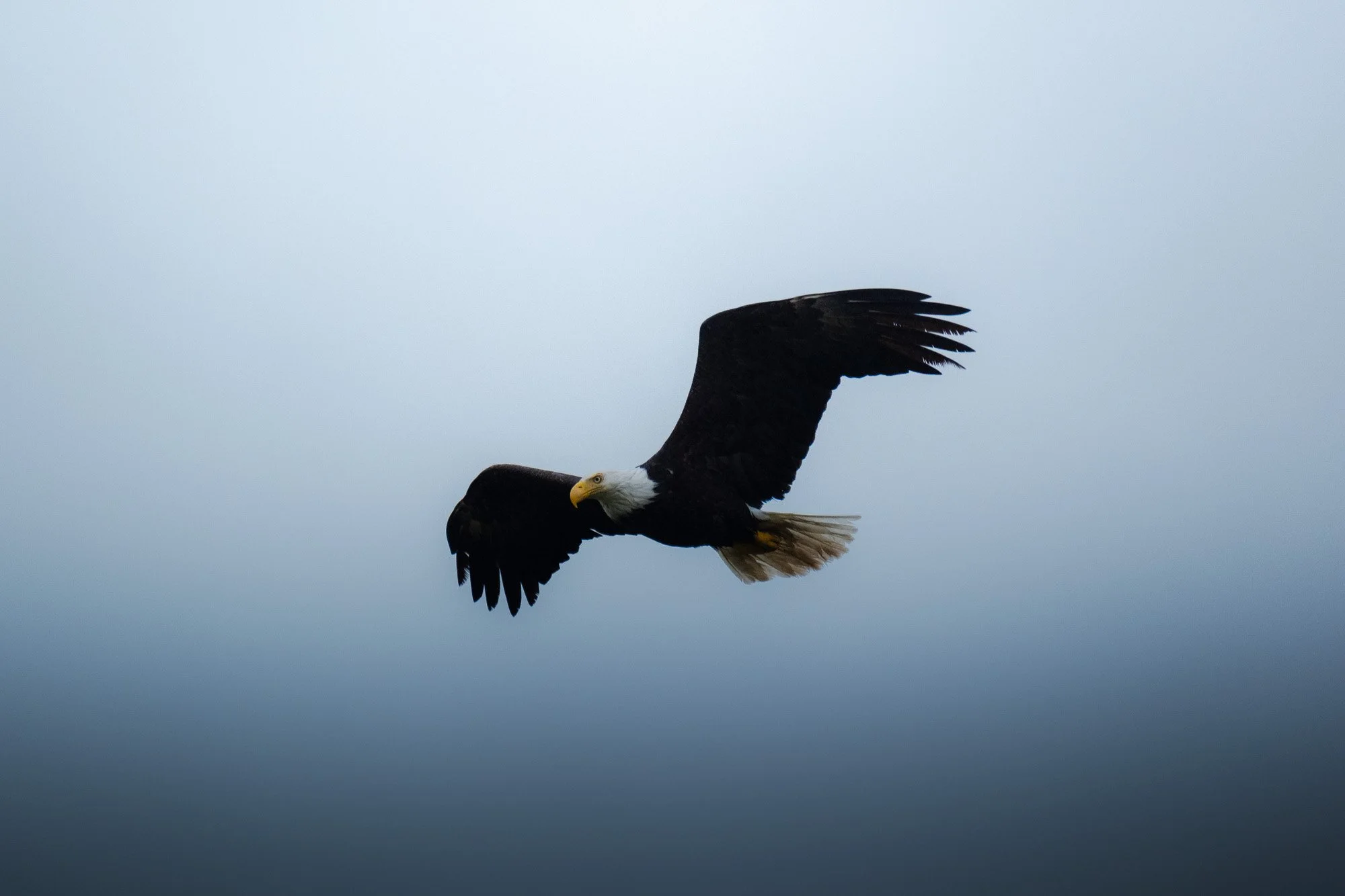
Now we get to how to frame your compositions and how to edit your images. Which one of these images is more interesting?
I would choose number 1 because the surrounding landscape gives context and enhances the feeling and mood to the image. Image number 2 is an eagle against a blank canvas. Don’t fret. Every wildlife photographer, even the professional ones, has hundreds, if not thousands, of number 2’s. It’s part of the process. What is important is understanding what types of processes or settings can enhance your composition. For these bald eagle photos, it is including the misty ocean in the background, the ground close underneath, and the cold landscape. Because it was a cold day! I was soaked through, and my editing choices for this image reflect that.
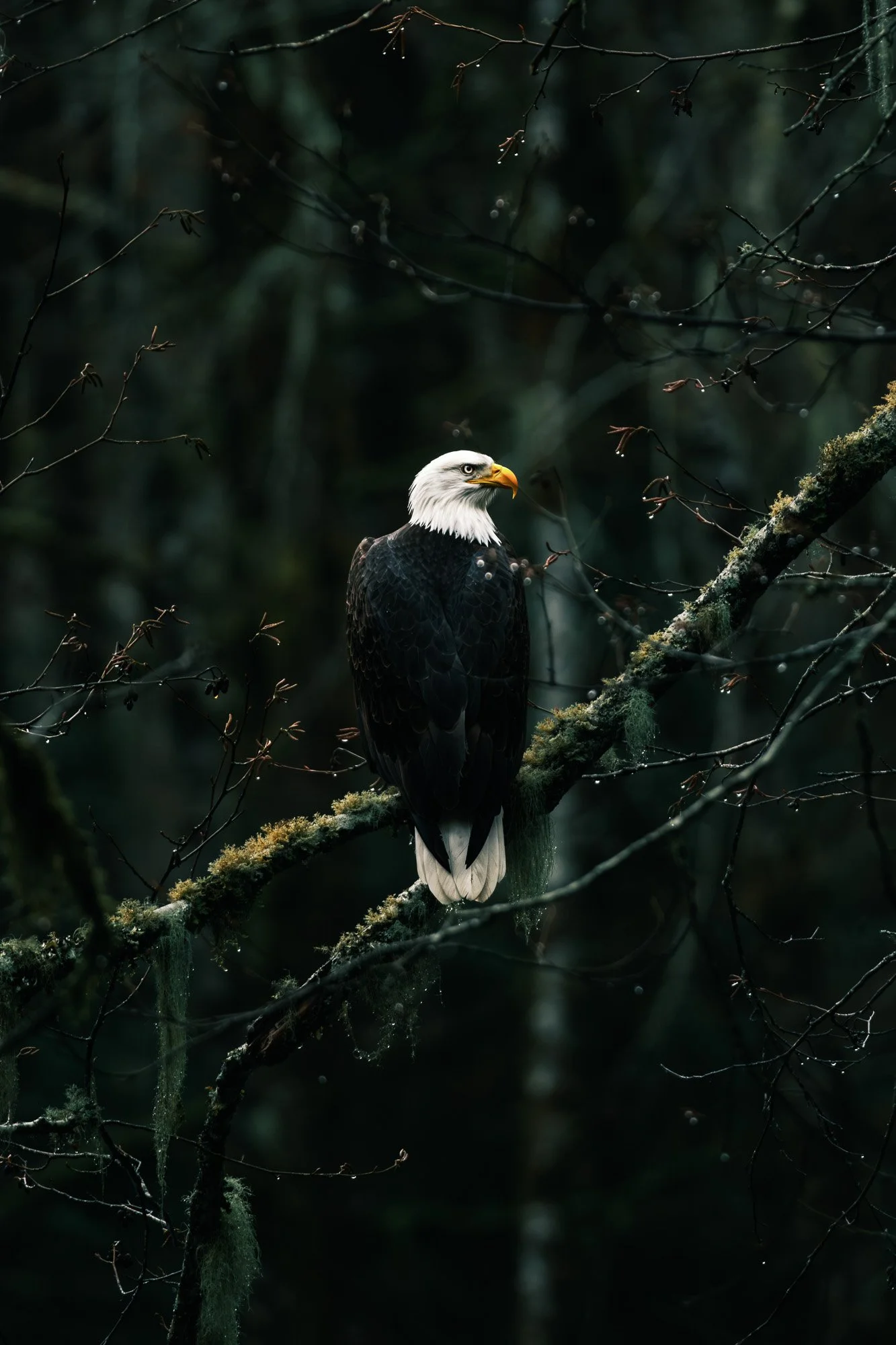
Bald Eagle perched in the rainforest near Rockport, Washington USA.
Interested in getting shown the best spots and the best photo techniques to see bald eagles by a local wildlife photographer? Here is a link to my workshops for 2027: https://www.quinnaebiphotography.com/bald-eagles-of-washington-state-photo-workshop